02
Project NIVIS · Alpine evacuation vehicle
Year 2025
Role Concept · Industrial · Systems

A vehicle written for the minutes that follow.

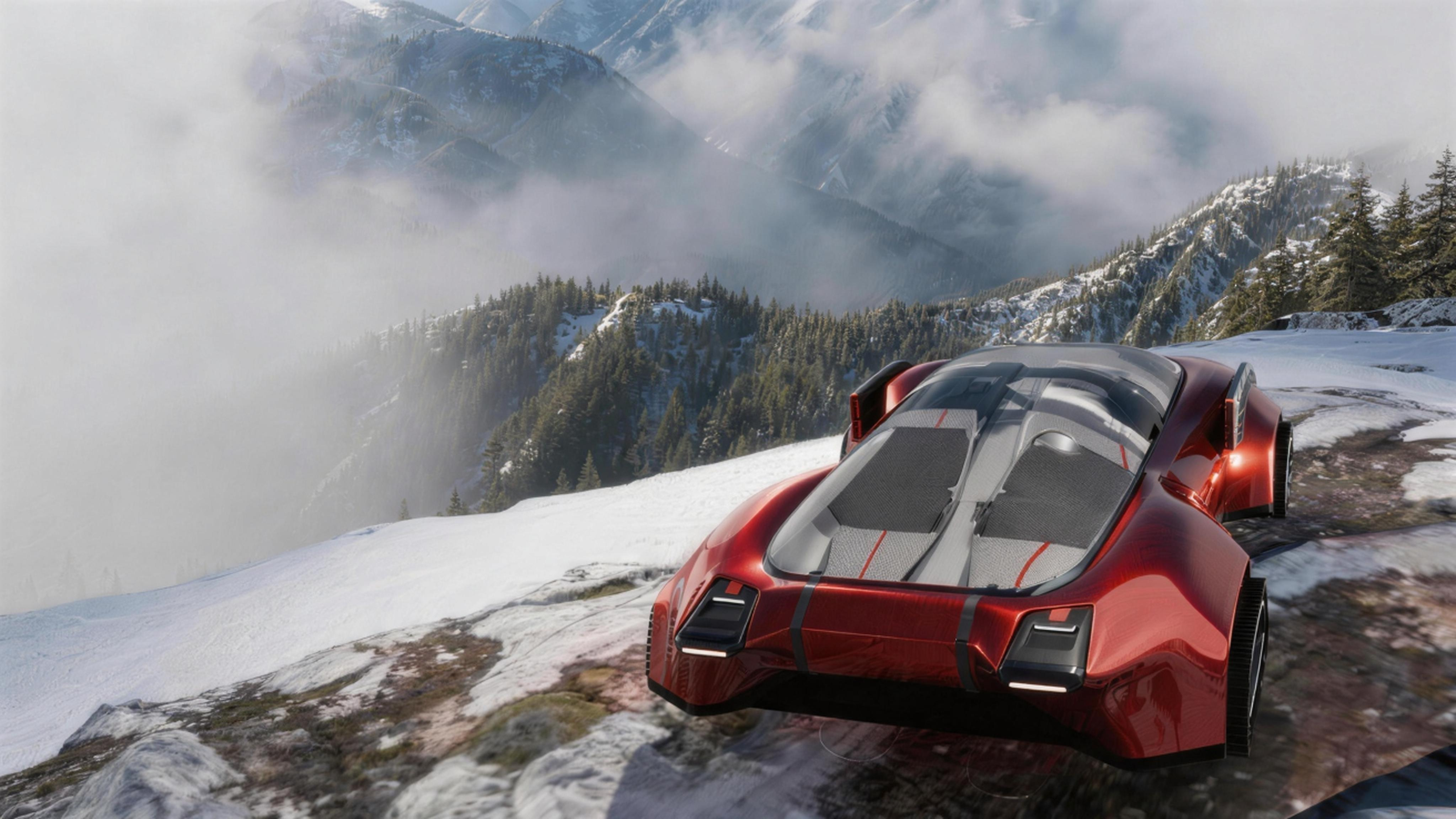
NIVIS is a modular alpine evacuation vehicle — built to reach a buried rider faster than a patrol sled, stabilize the patient in place, and ferry them off the mountain without a transfer. Where AERIS buys the first critical minutes, NIVIS spends them well.

01Context

The rescue starts after the fall.

The survival curve for a buried alpine fall has a second cliff — the window between being found and being reached by a team equipped to help. Patrol sleds are fast on packed runs. Off-piste, they aren't.

Window

The 6–15 minute gap.

After a burial, survival probability falls sharply after the first six minutes and again at fifteen. Helmets can extend the clock. Reach time is still the variable that matters most — and it depends entirely on the vehicle.

15min survival
threshold
Terrain

Steep, soft, and far from a road.

Most patrol-sled missions end at the edge of the groomed run. Beyond that, the vehicle has to float over deep snow, climb what a skier would hike, and do it without waking a secondary slide.

38° target
slope angle

What if the rescue rode in with the rescuers?

Not a sled towed behind a skier. Not an ambulance waiting at the base. A vehicle that carries the patrol to the victim, and the victim off the mountain — in a single piece of equipment.

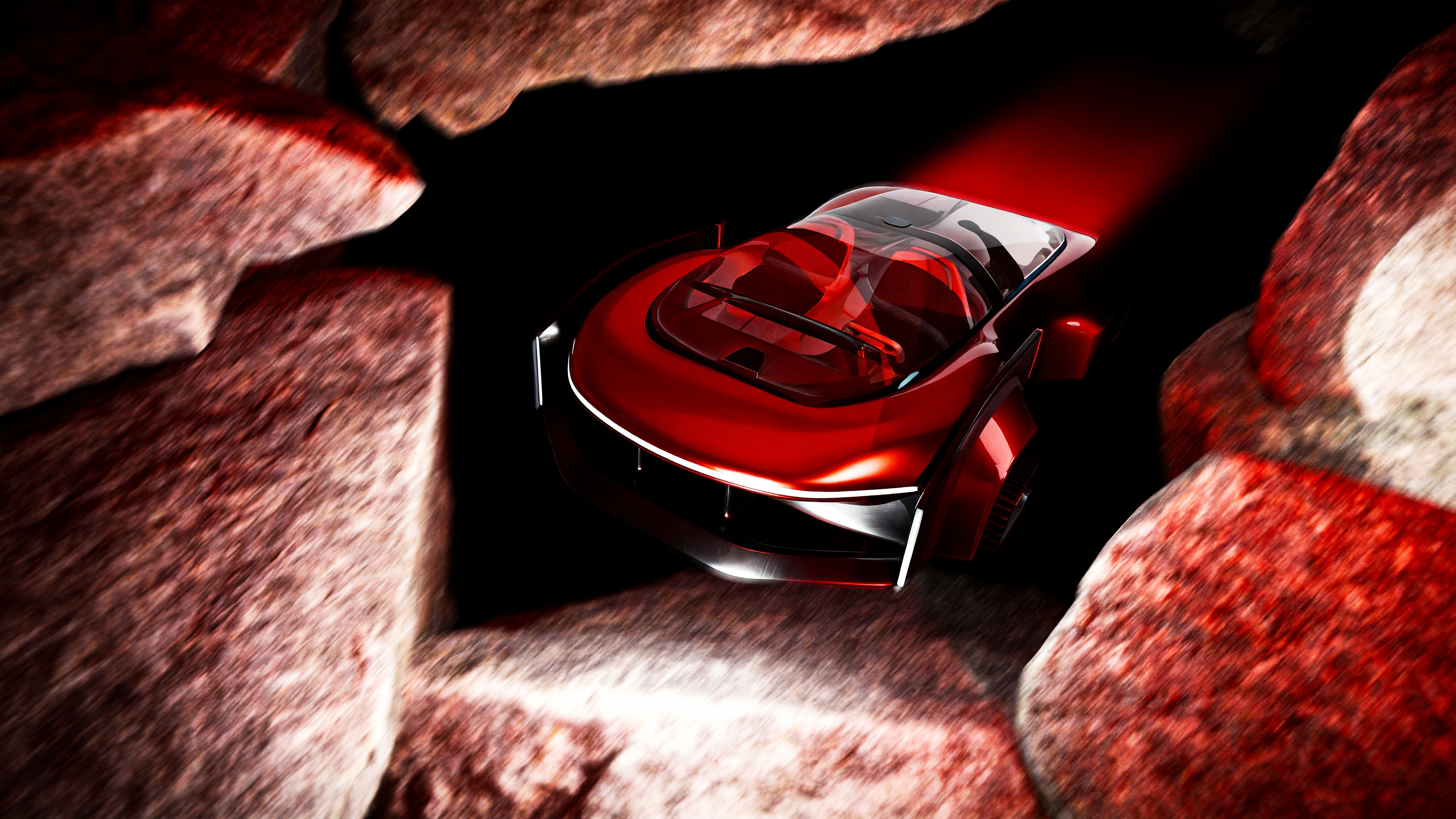
NIVIS — three-quarter view threading between rocks under emergency red light
02Walkthrough

Three systems, one shell.

Drivetrain tuned for soft alpine, a treatment cabin that doubles as a rescue bay, and a deployable bed that meets the patient at ground level. Scroll through to see each of them in turn.
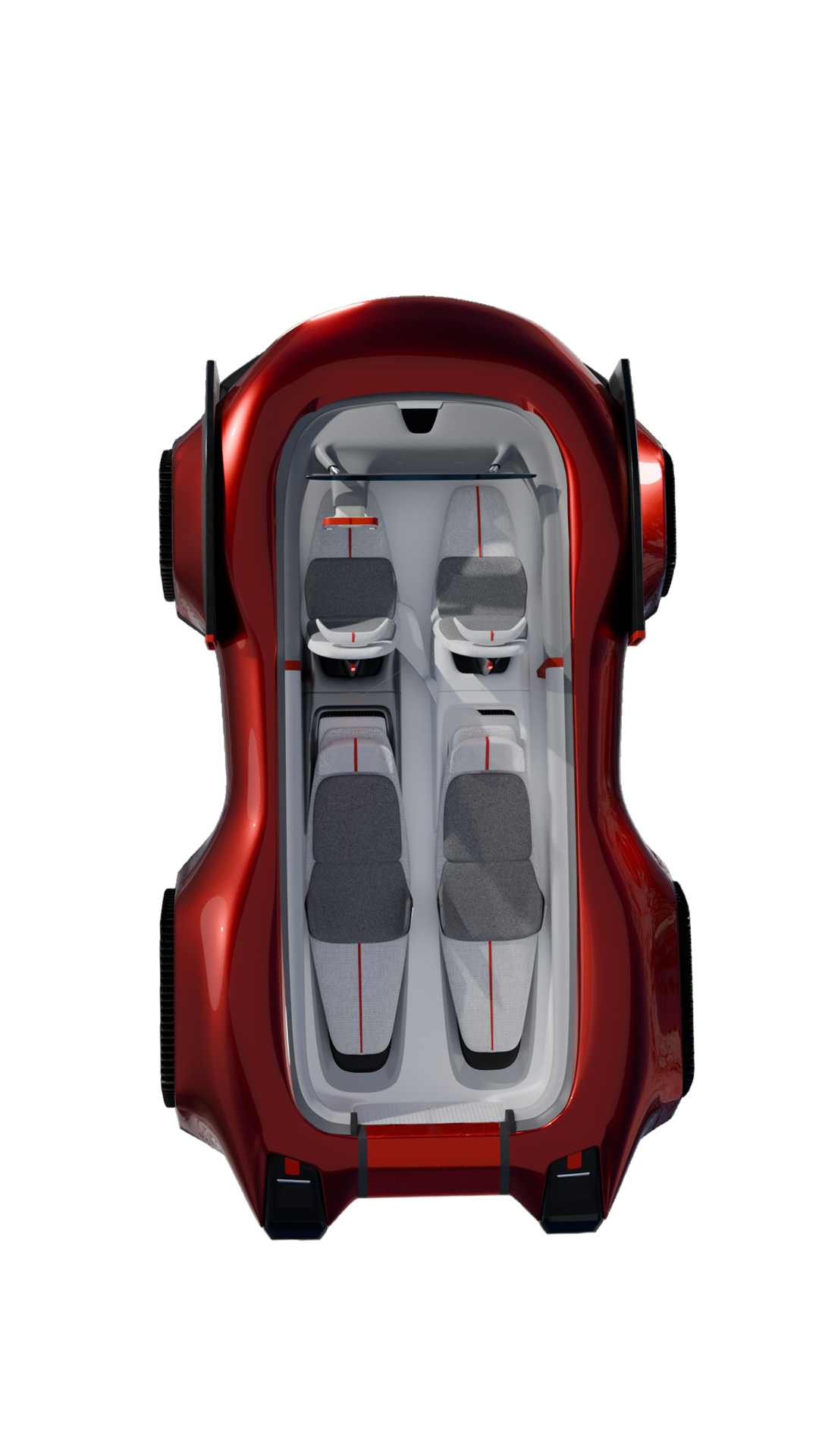
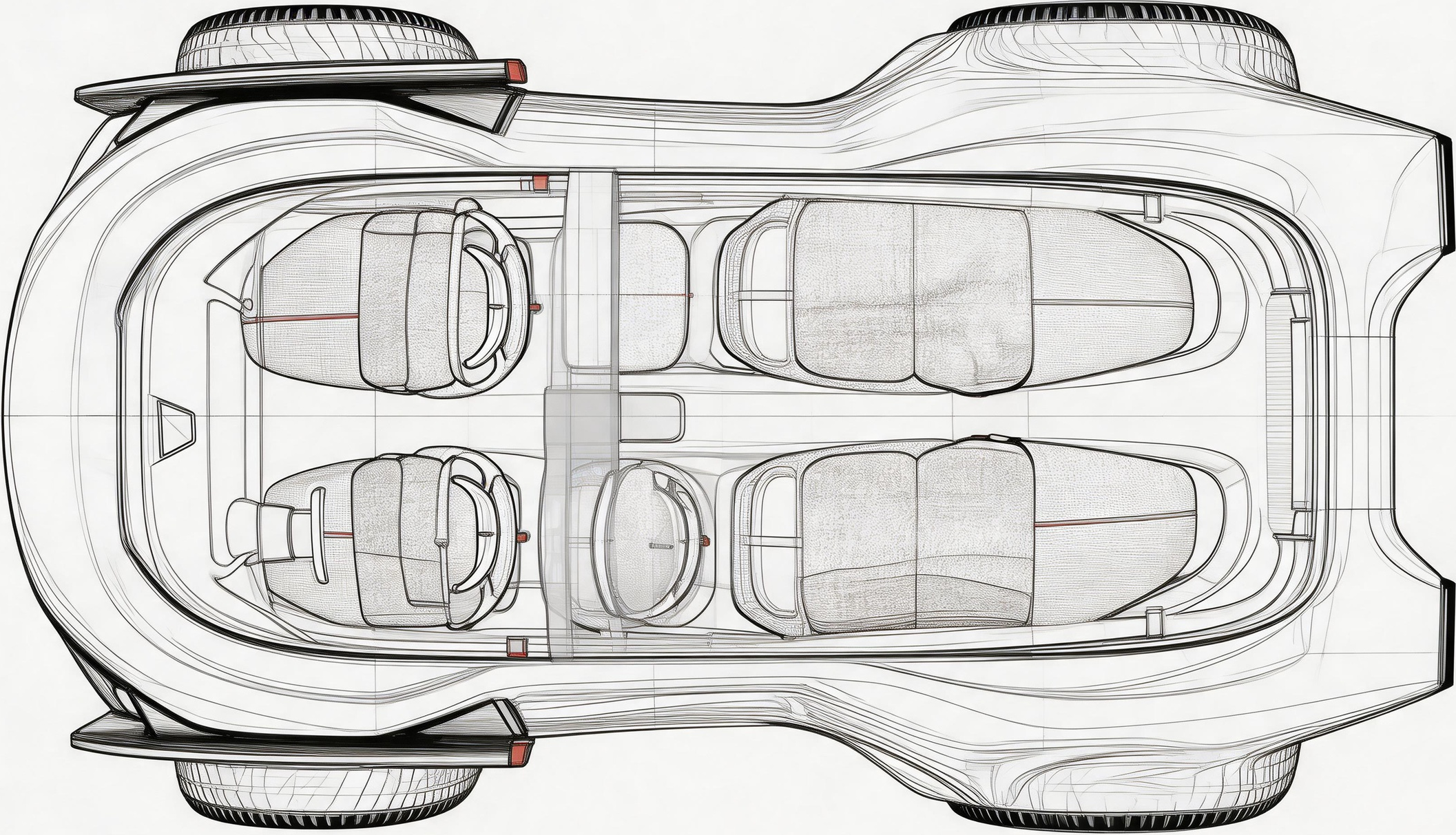
NIVIS — top-down render with cabin layout visible
Details

Where the form earns its lines.

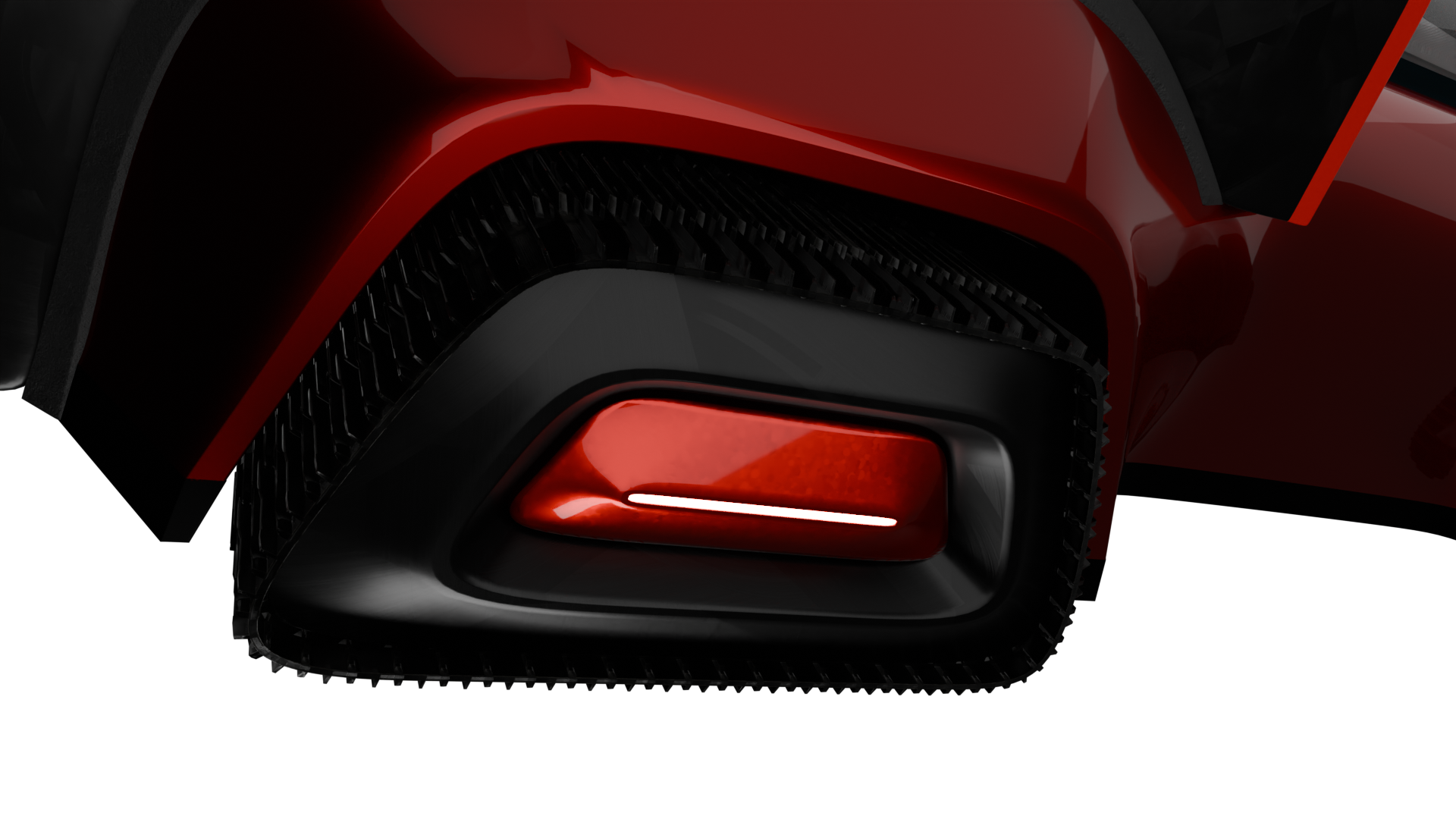
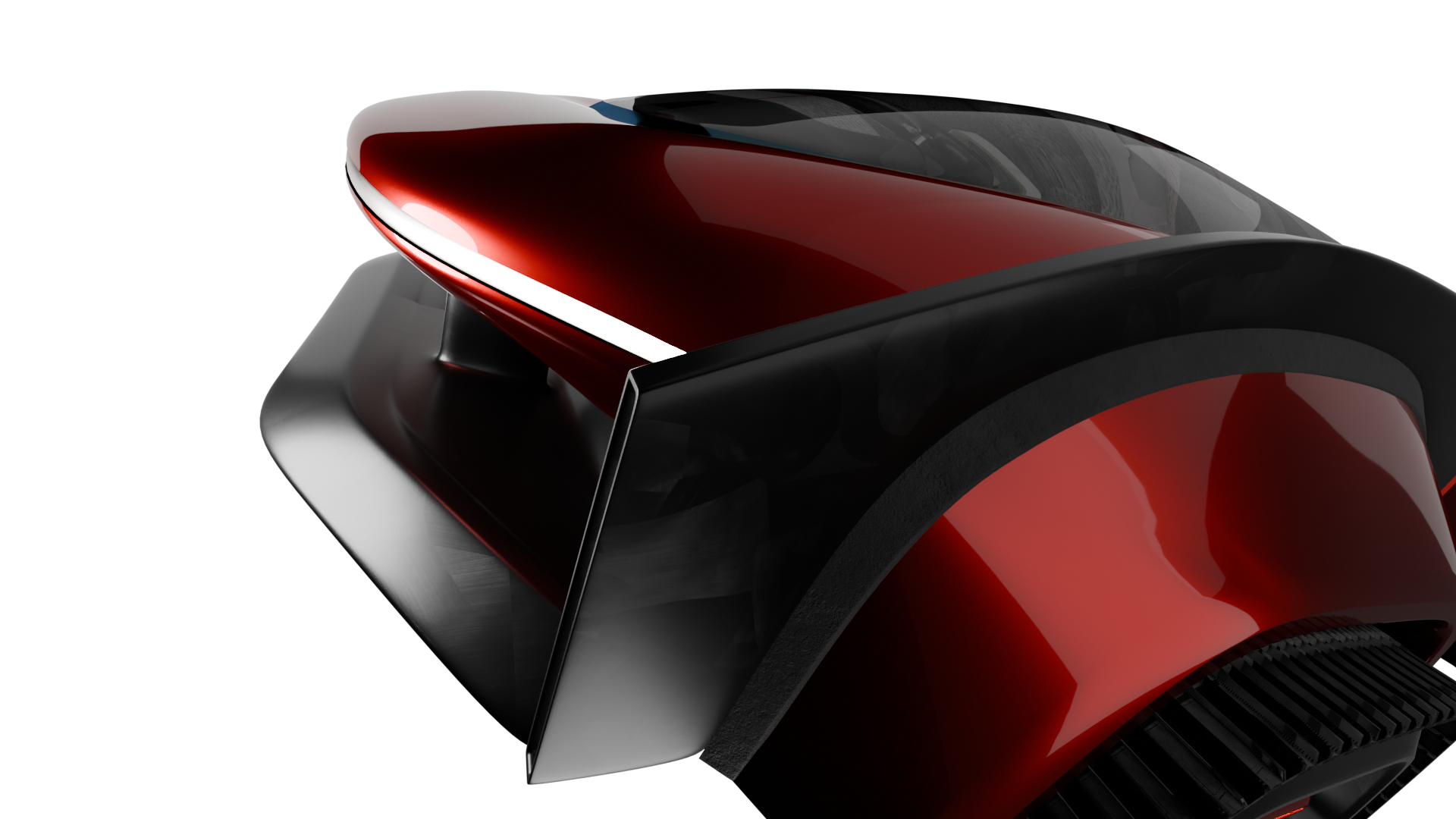
Surface close-ups of the elements that do double duty as aerodynamics, lighting, and visual identity — the seams where engineering meets sculpture.
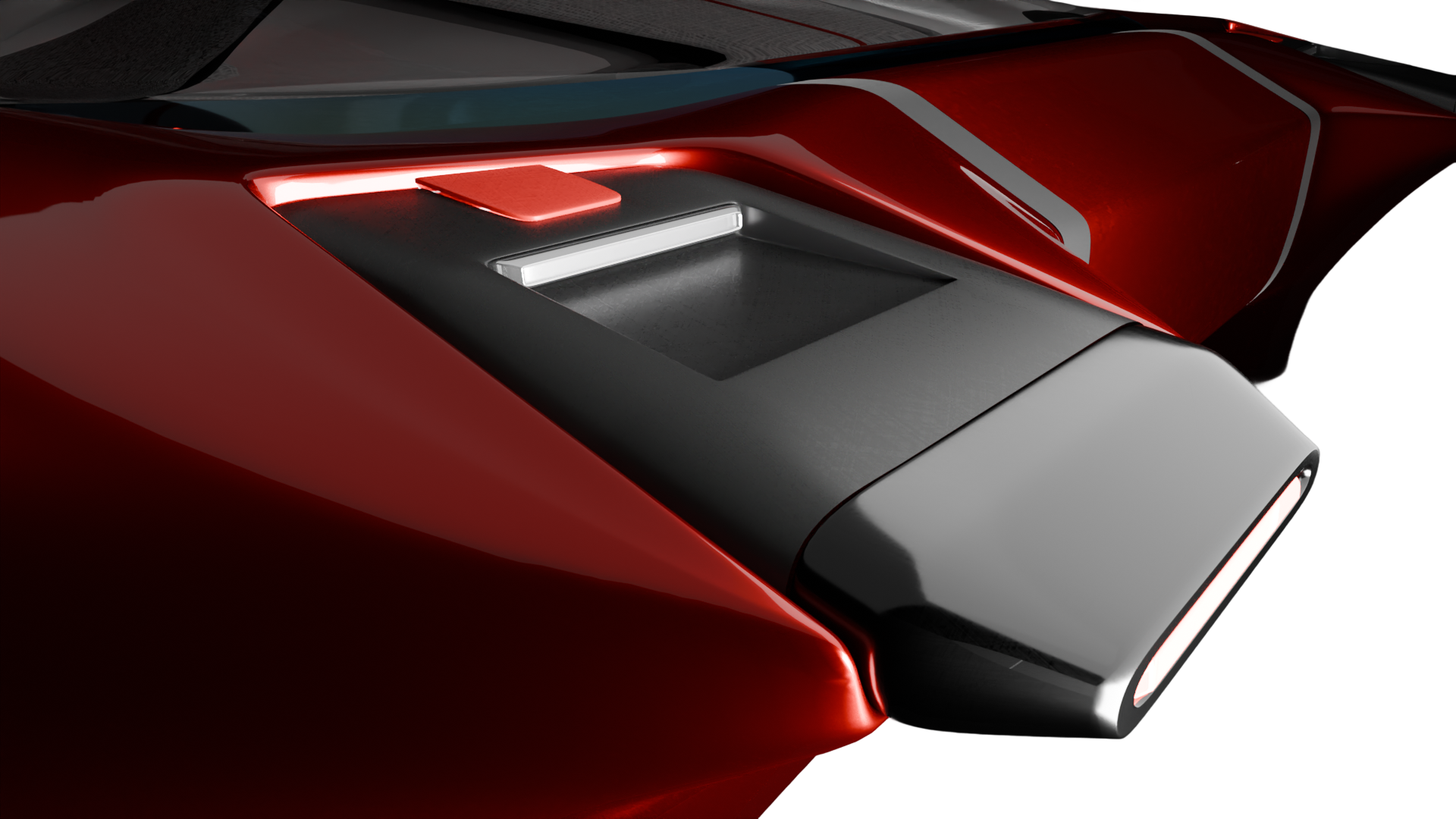
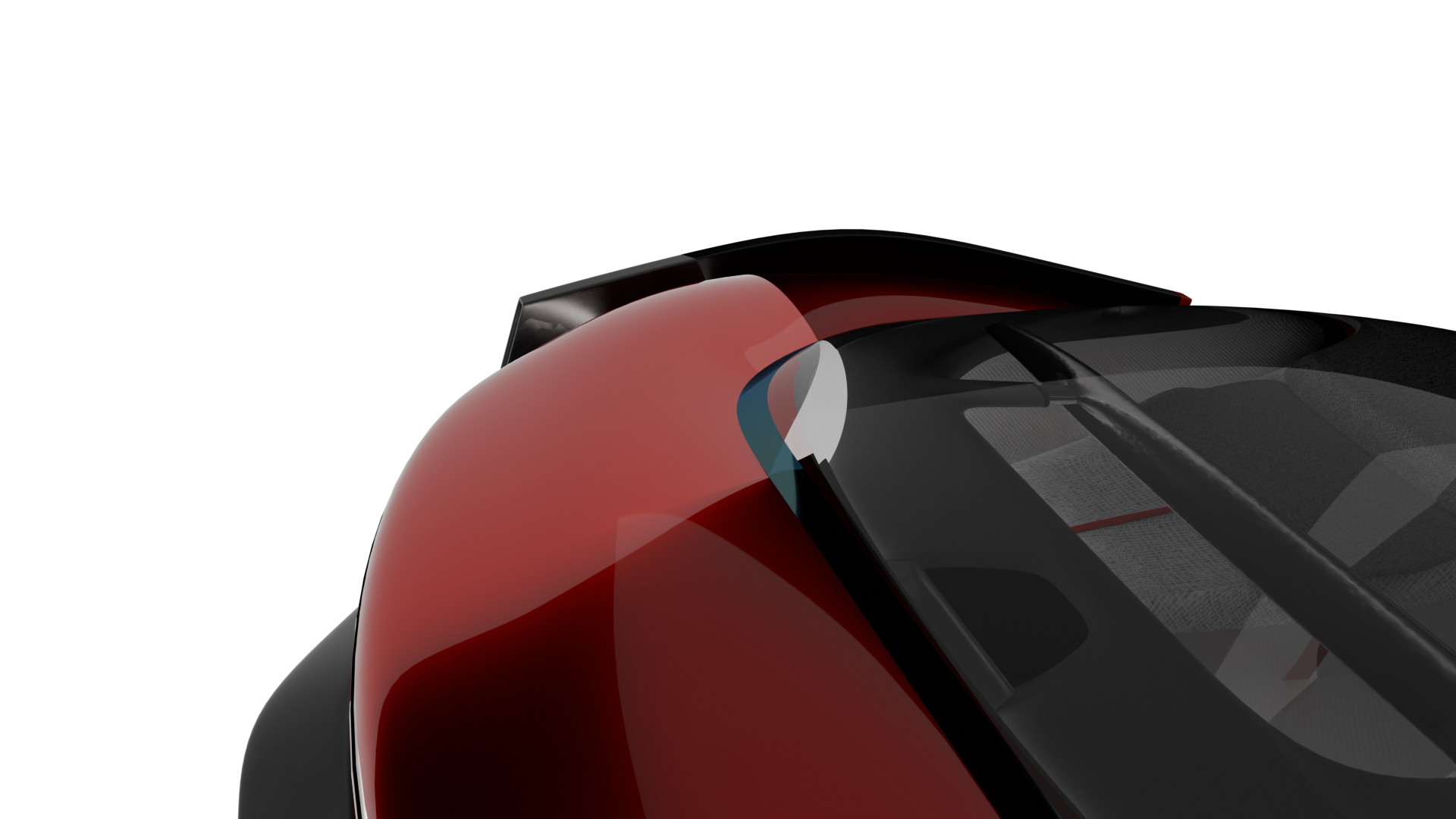
NIVIS rear haunch — brake light strip and aero strut
01Rear · tail light
NIVIS canopy spine — front-fender to glazing transition
02Canopy spine · glazing line
NIVIS front intake — cooling vent with red illumination
03Track · drivetrain
NIVIS rear wing — aero spoiler over the deployable bay
04Nose · front fascia
Interior

The cabin is the bay.

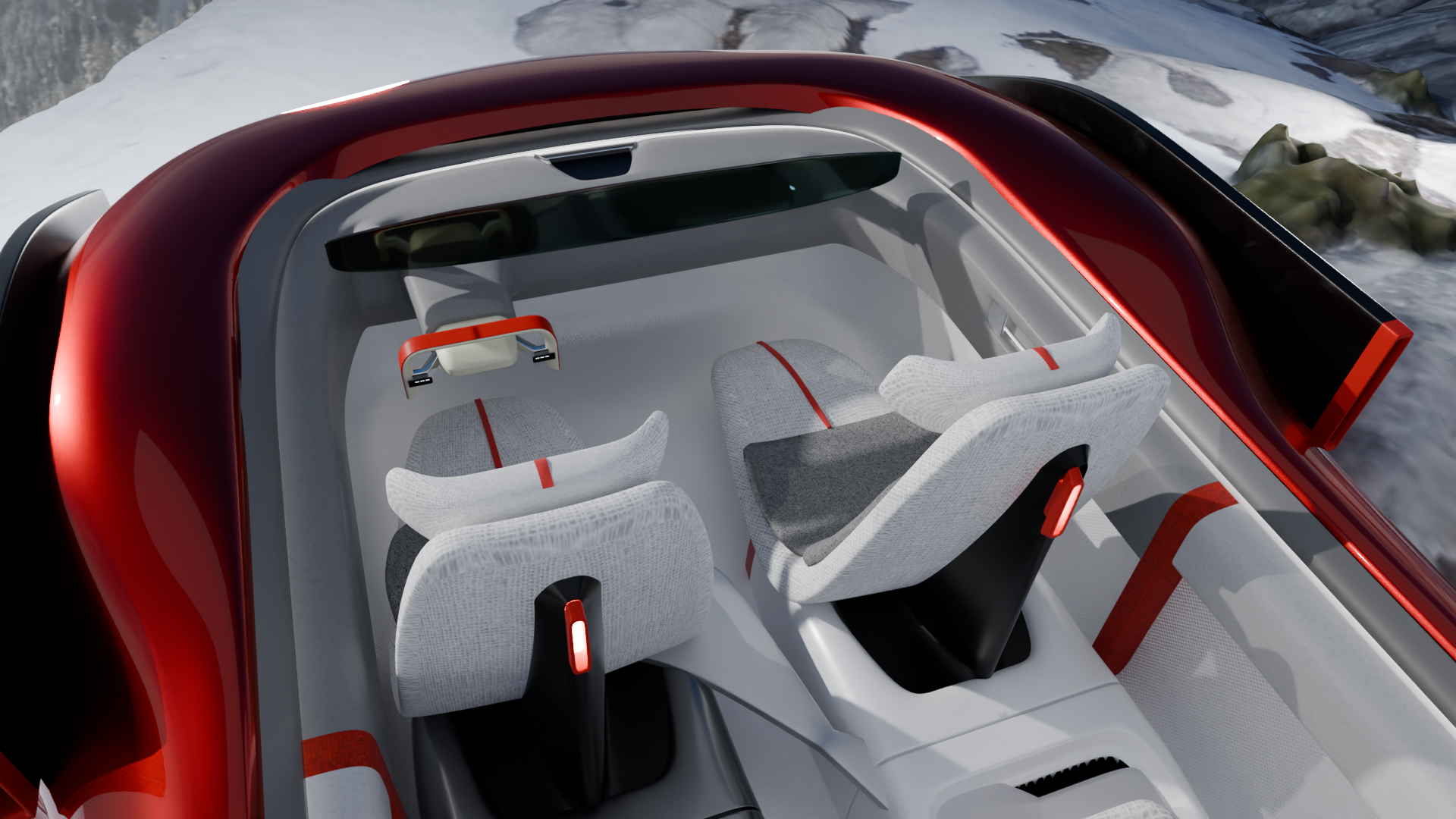
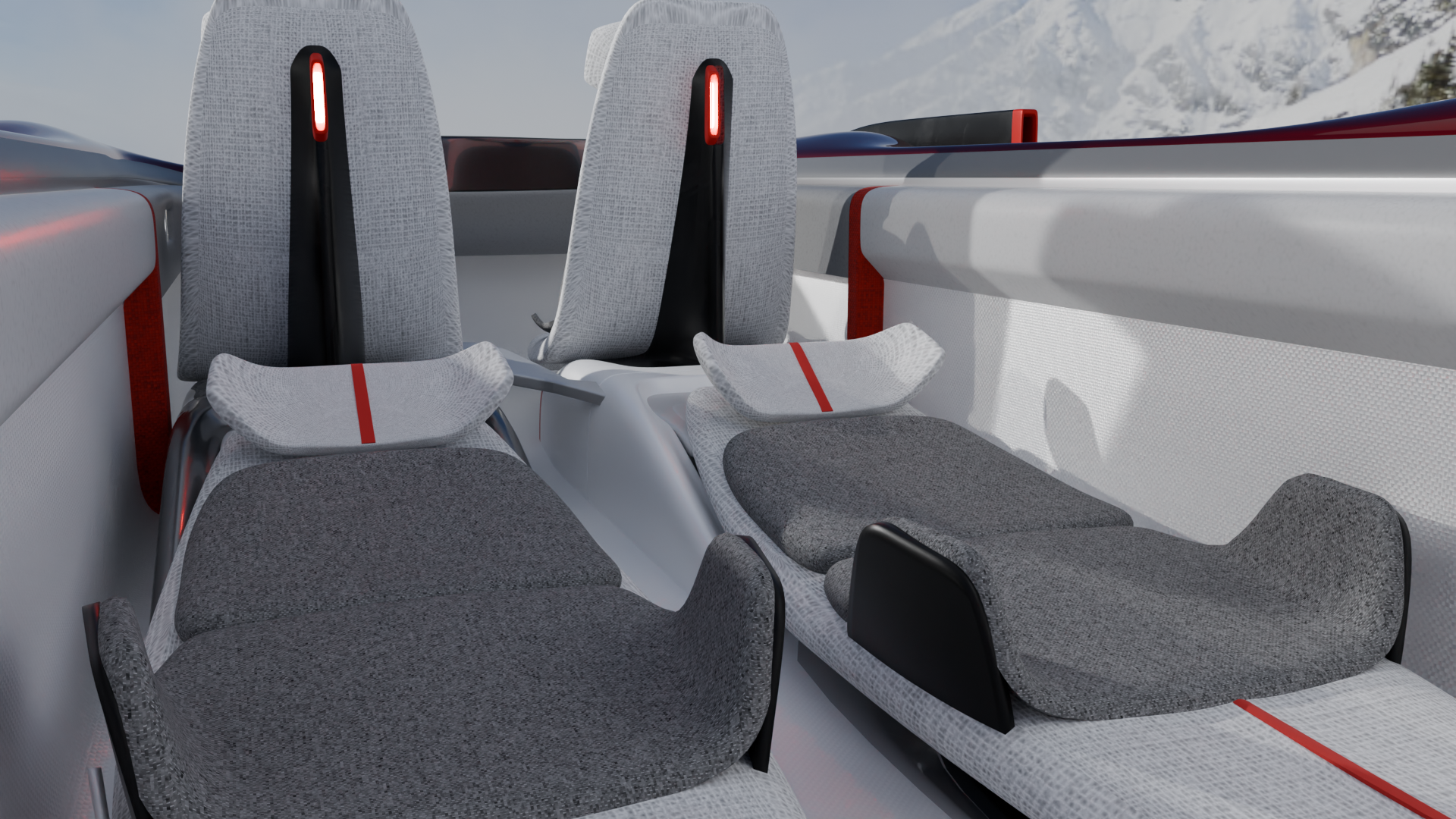
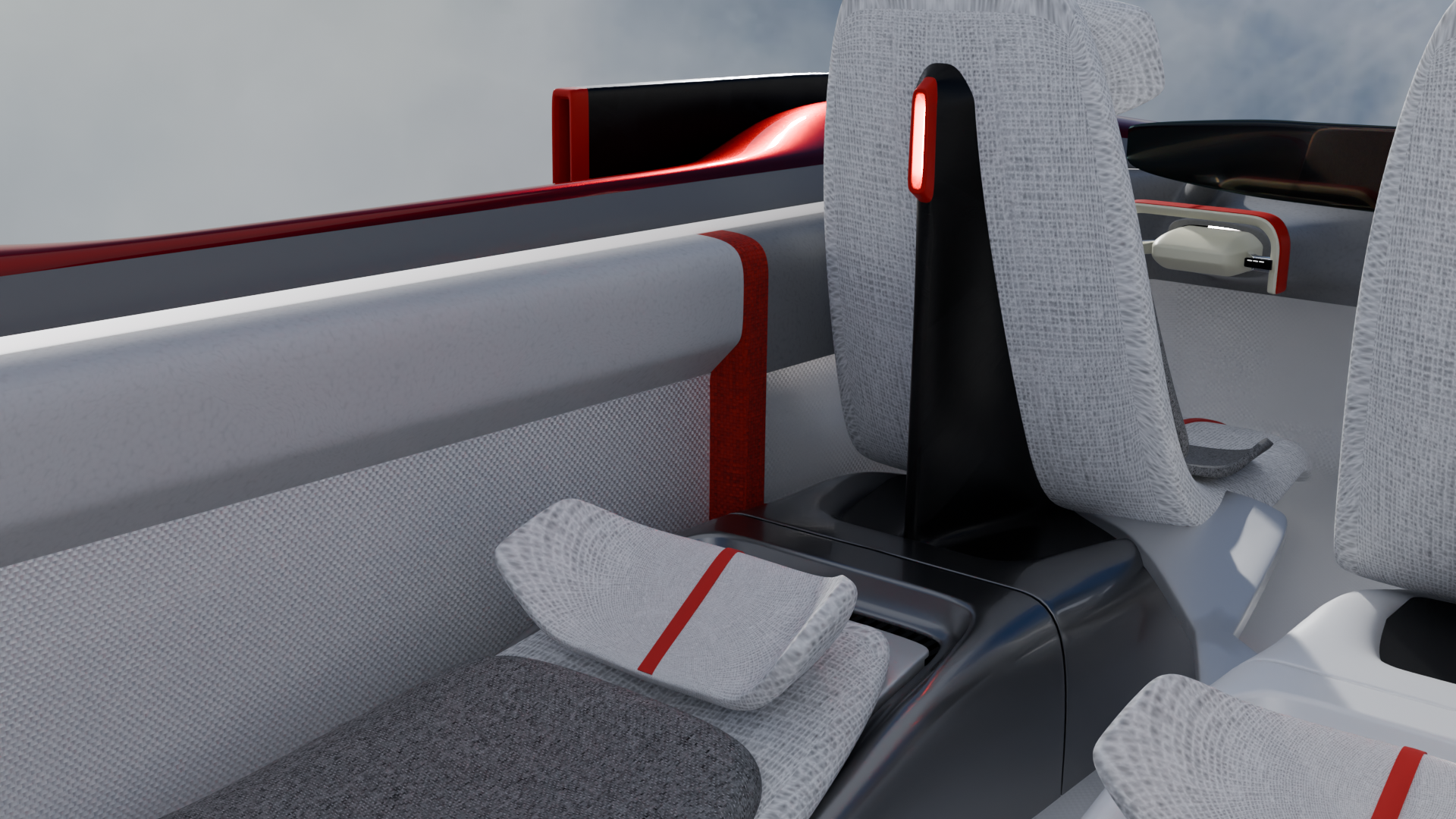
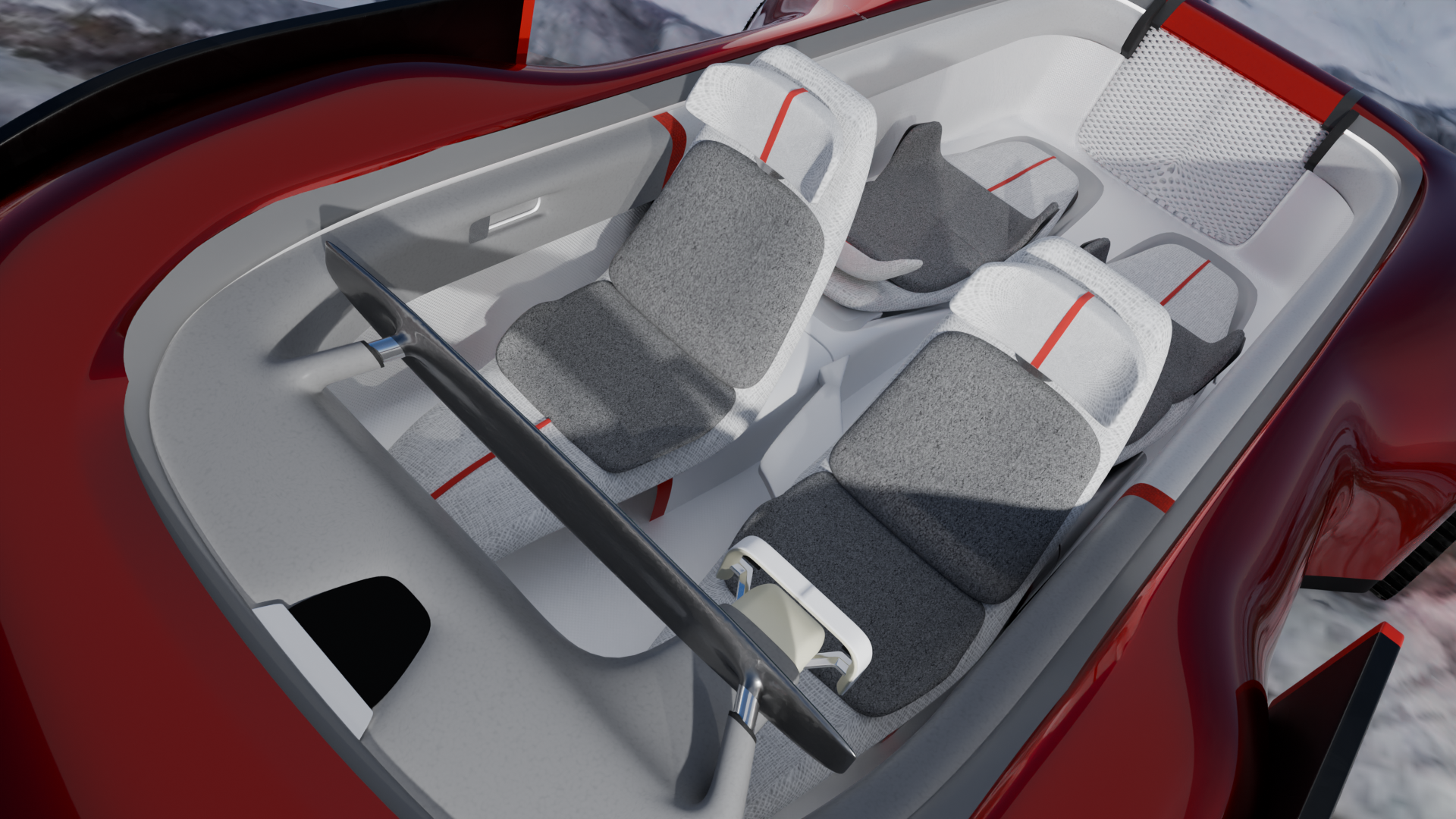
Two patrol up front, modular crew + patient bay behind. The interior reads as a treatment room first and a vehicle second — every surface picks up a red accent on the way to the patient.
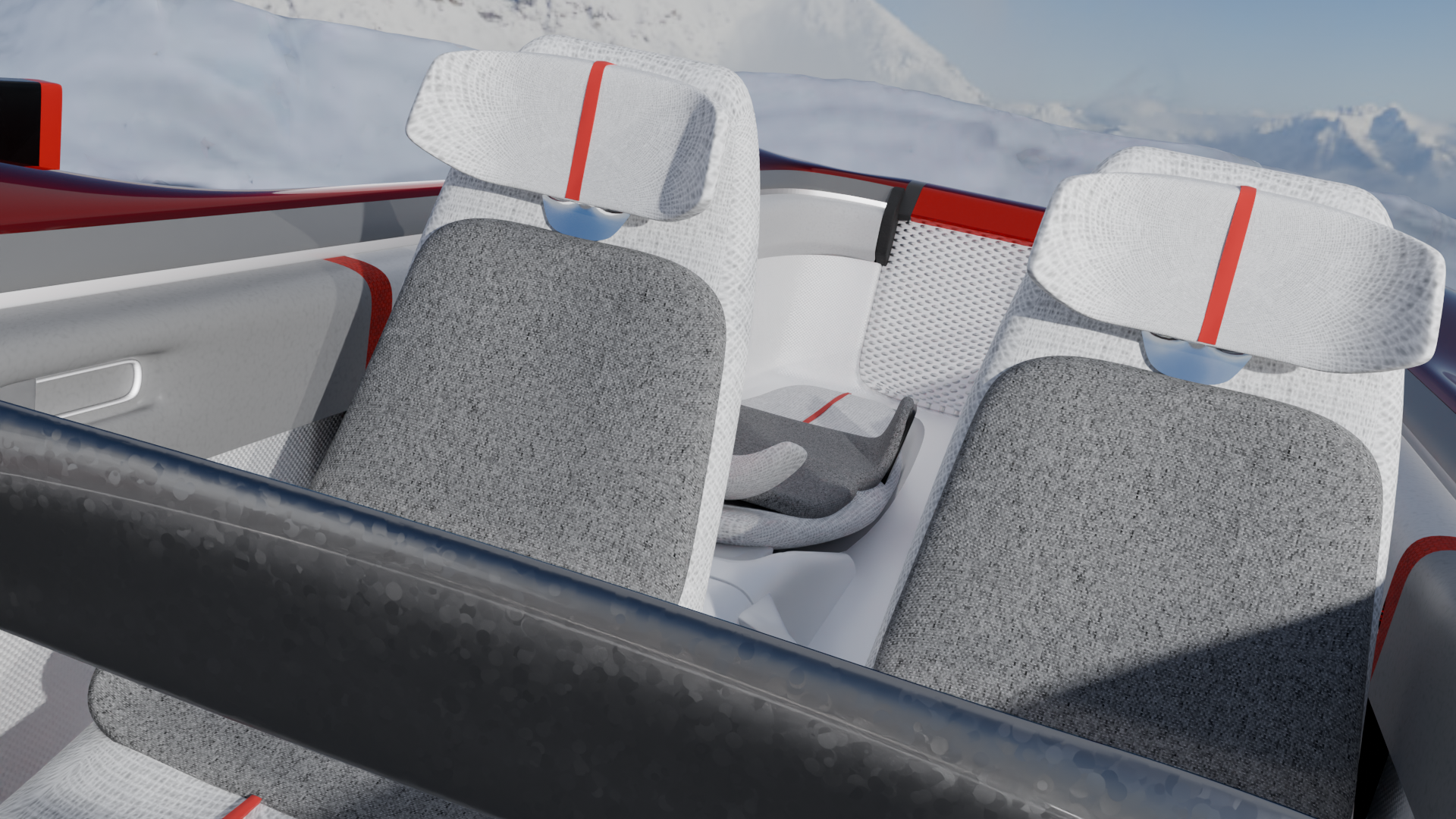
NIVIS — front seats, eye-level with snow horizon
01Patrol seats · forward
NIVIS — top-down view of the four-seat treatment bay
02Bay · top-down
NIVIS — three-quarter forward view, red interior wall
03Cabin · 3/4 view
NIVIS — rear bay with deployable patient board
04Rear · patient bay
NIVIS — side detail of seats and red accent strip
05Seat detail · red strip
02Deploy

The stretcher comes down
to meet the snow.

Lifting a patient from the ground into a high-sill vehicle is the slowest, most painful moment of an alpine rescue. NIVIS eliminates it entirely: the treatment bay's floor detaches and rides a pair of rails down to the snow surface, so the patient is loaded at ground level and rises with the bed already locked.
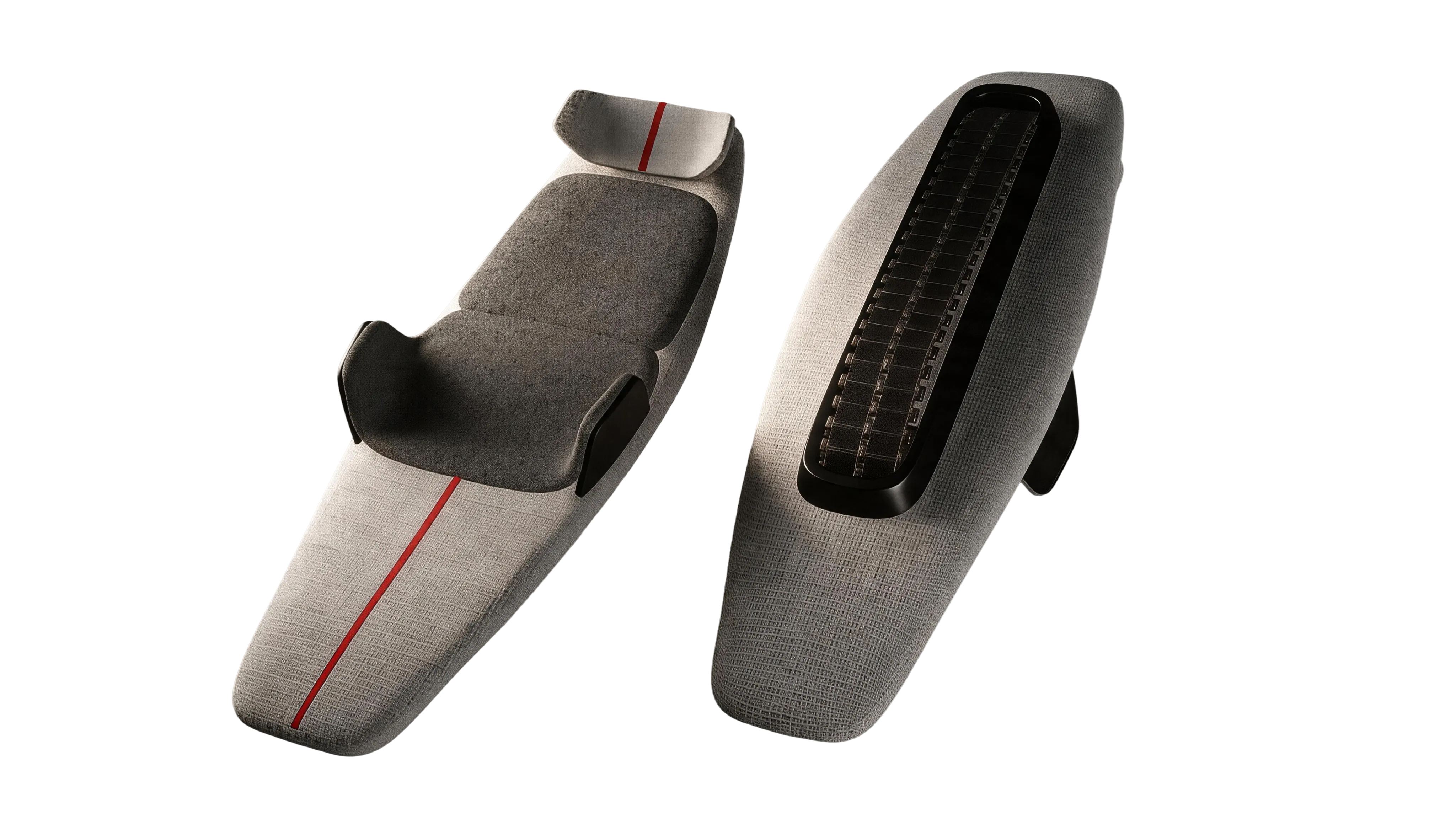
NIVIS deployable spine board — isolated render
Tracks · live motion
Sequence · on site

Four frames, one rescue.

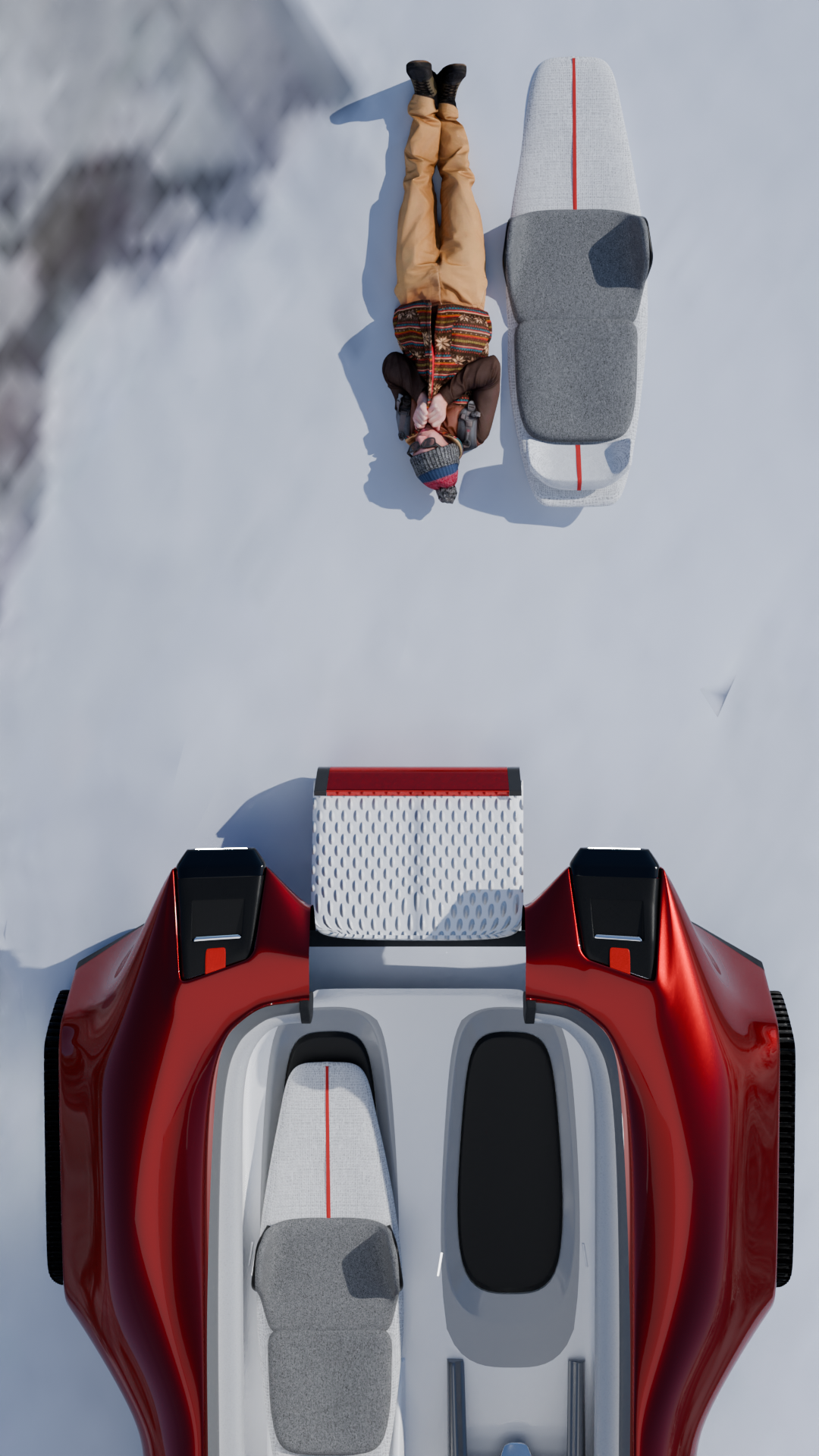
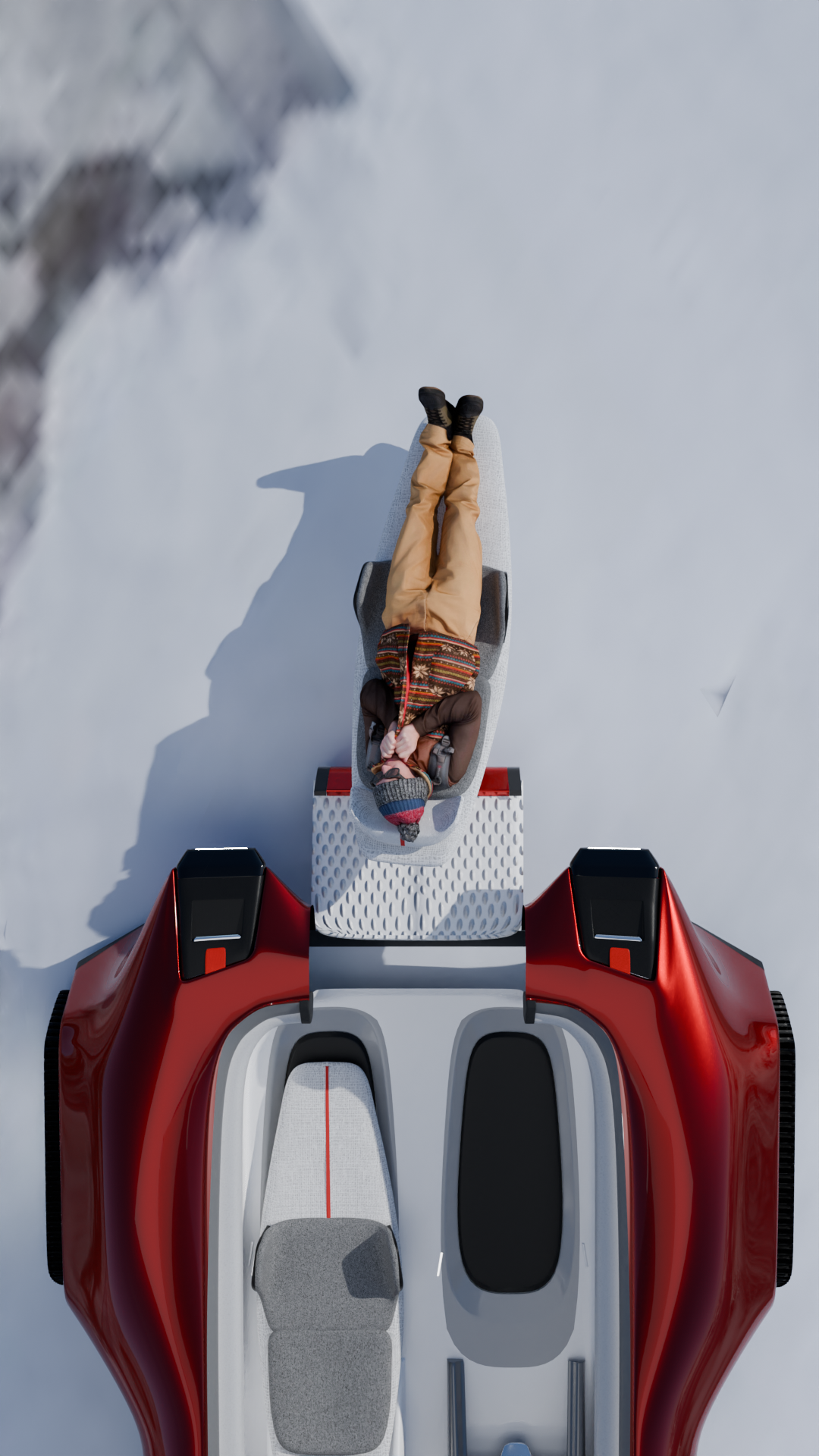
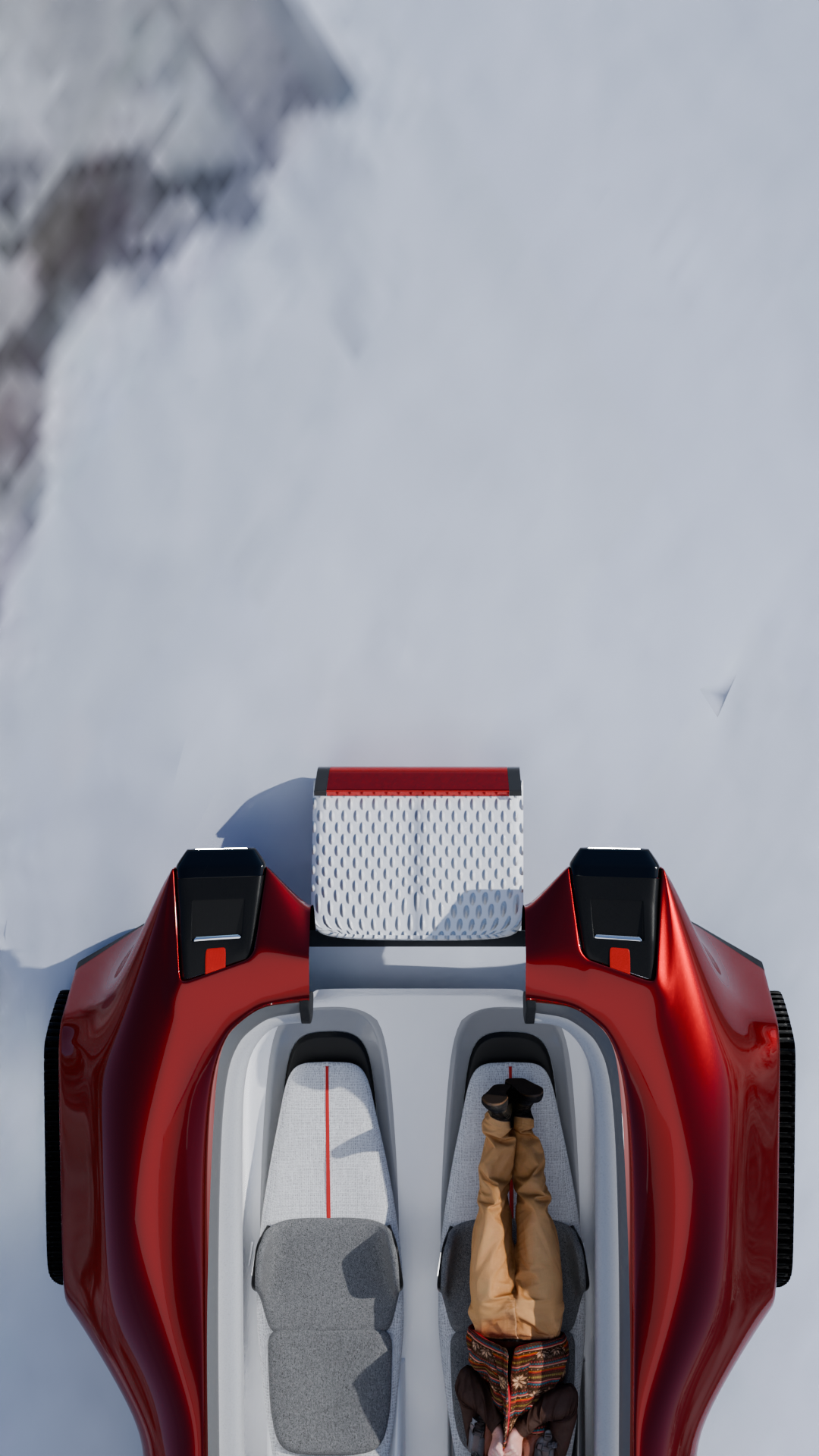
Top-down view of the moments after NIVIS arrives at the patient. Scroll through the timeline — the clock runs while you do.
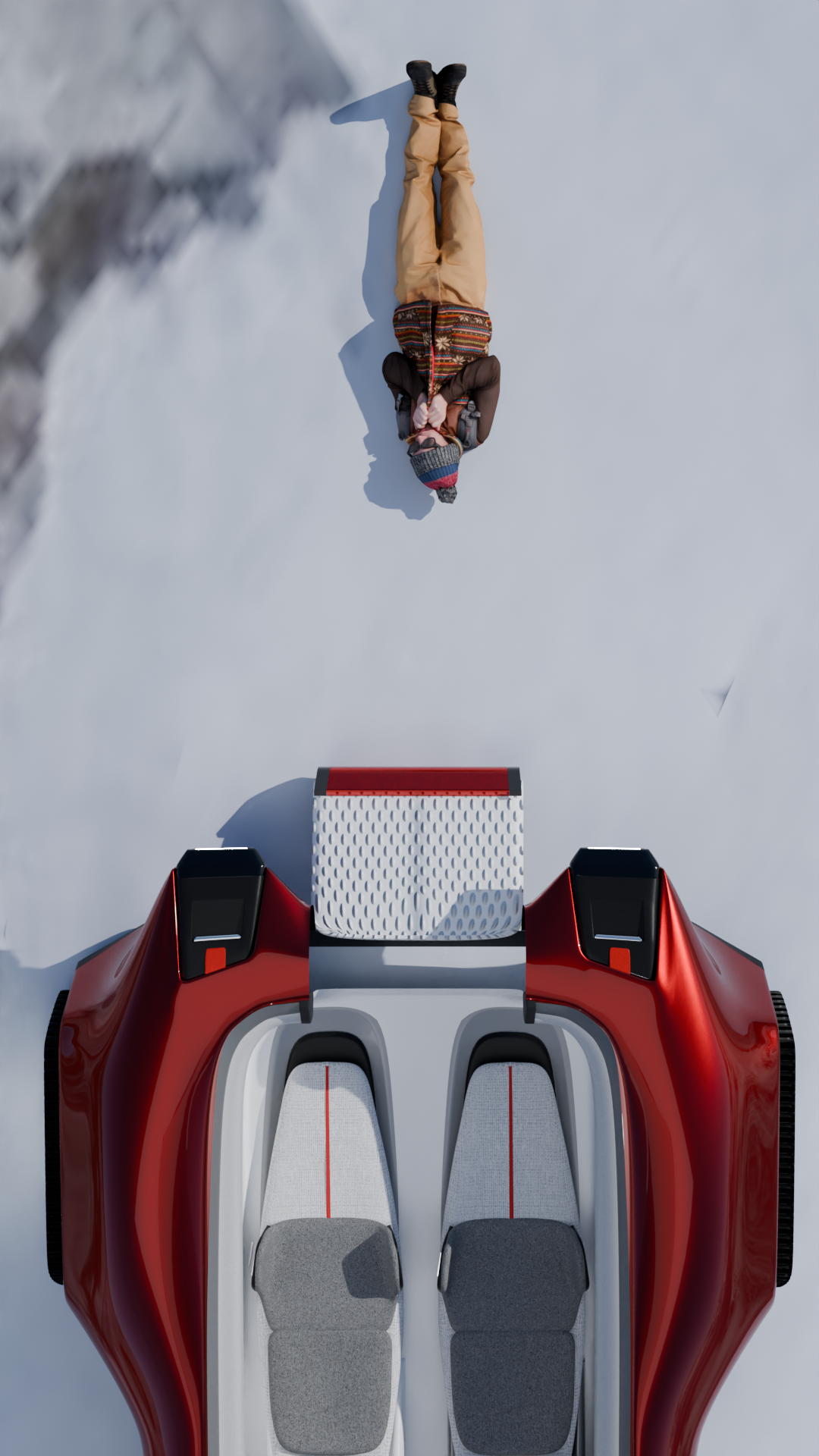
NIVIS parked alongside the patient, top-down Patient
Stretcher deployed on the snow next to the patient Chair out
Patient lifted onto the deployable bed Return
Patient loaded inside the cabin, bay sealed Patient secured
01 · Arrive
00:00
Mission elapsed

Park alongside the patient.

The bed is already lowered to ground level on approach. No final maneuvering, no time spent positioning a sled.

Rescue · under 3:00
03 / Tech pack

Measured, marked, ready to build.

Dimensions, powertrain, and the bill of materials behind NIVIS. Designed so every major system — battery, track, canopy, bed — is field-serviceable with one tool set.
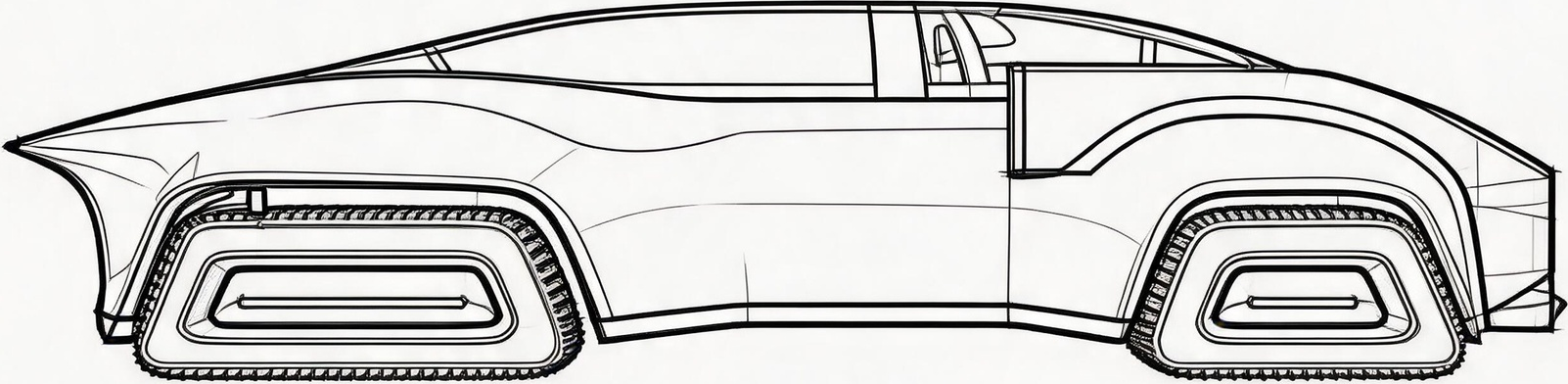
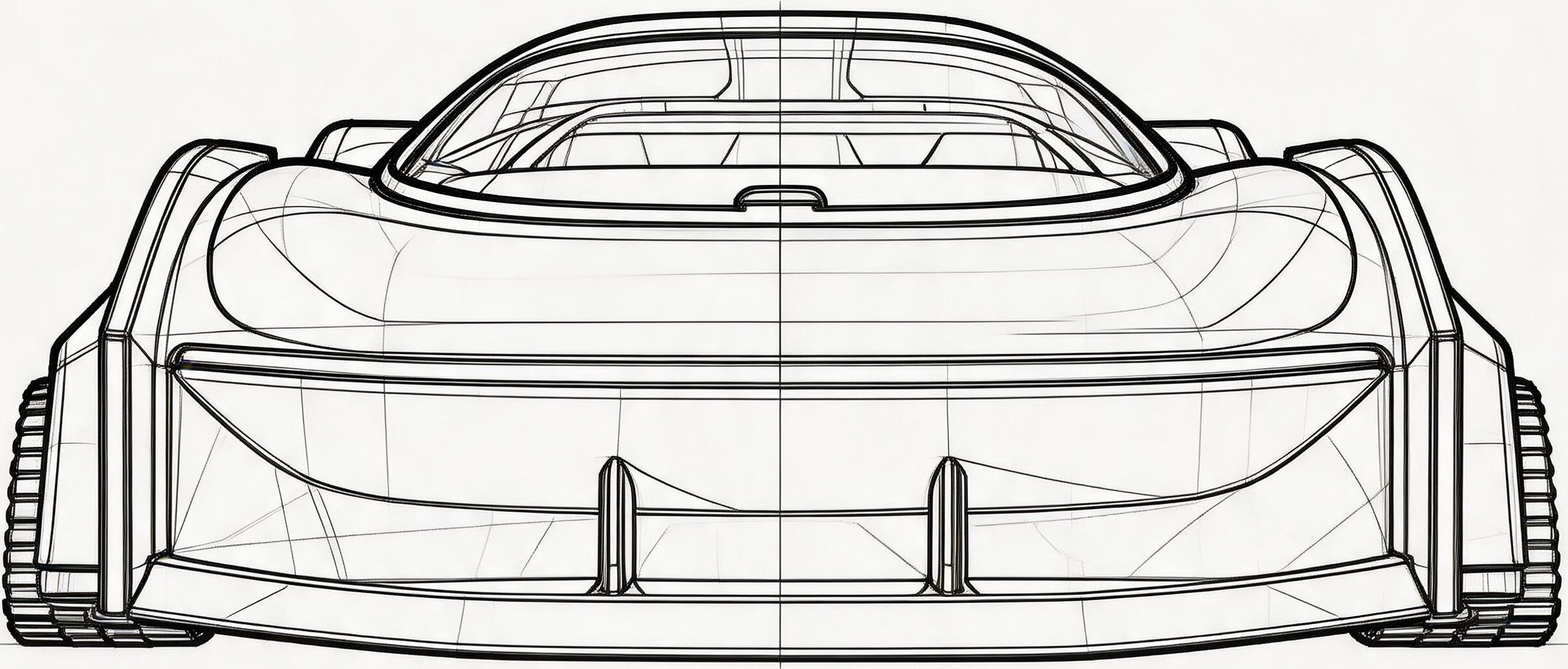
SH-01 NIVIS · orthographic · 3rd-angle · 1:20
Rev 04 · 2026-03
ASide L 4,820 · H 1,640
NIVIS side orthographic drawing
1 Canopy
2 Intake
3 Track module
BFront W 2,180 · H 1,640
NIVIS front orthographic drawing
CTop L 4,820 · W 2,180
NIVIS top-down orthographic drawing
Projection 3rd-angle · ISO 128
Scale · mm
05001,000
Project NIVIS · alpine rescue vehicle
Drawn by Z. Xu · Zuocheng
Scale 1 : 20
Units mm
Projection 3rd-angle · ISO 128
Sheet SH-01 / 01 · Rev 04
Length · L
4,820mm
Bumper to bumper, tracks extended.
Width · W
2,180mm
Over-track, including fender flares.
Height · H
1,640mm
Roof line, beacon bar stowed.
Curb weight
1,980kg
With fully staged rescue bed + kit.
Powertrain
2× e-motors
Twin permanent-magnet, 240 kW combined.
Battery
106kWh
LFP pack, heated, hot-swap service panel.
Top speed · snow
72km/h
Governed for patient stability in cabin.
Max gradient
38°
With active weight transfer, loaded cabin.
Alpine red clear-coat
PPG Ceramicoat · 3H hardness · UV-stable
Laminated polycarbonate
PC · 12 mm · anti-fog / anti-scratch
Reinforced rubber tread
Kevlar-wound · 52 shore A · -40 °C rated
Anodized aluminum trim
6061-T6 · Type II clear · bead-blasted
Colorway

One body, five attitudes.

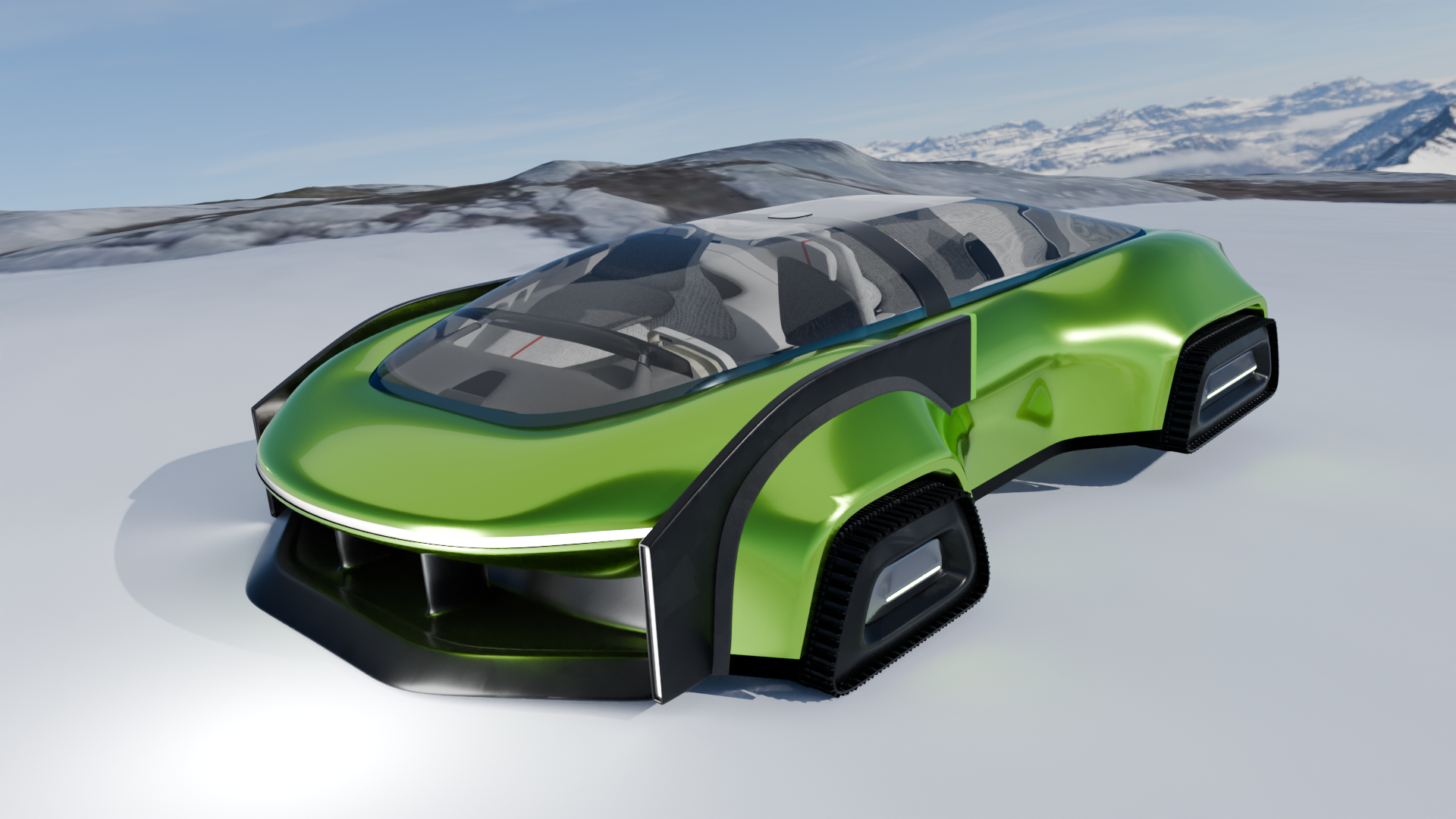
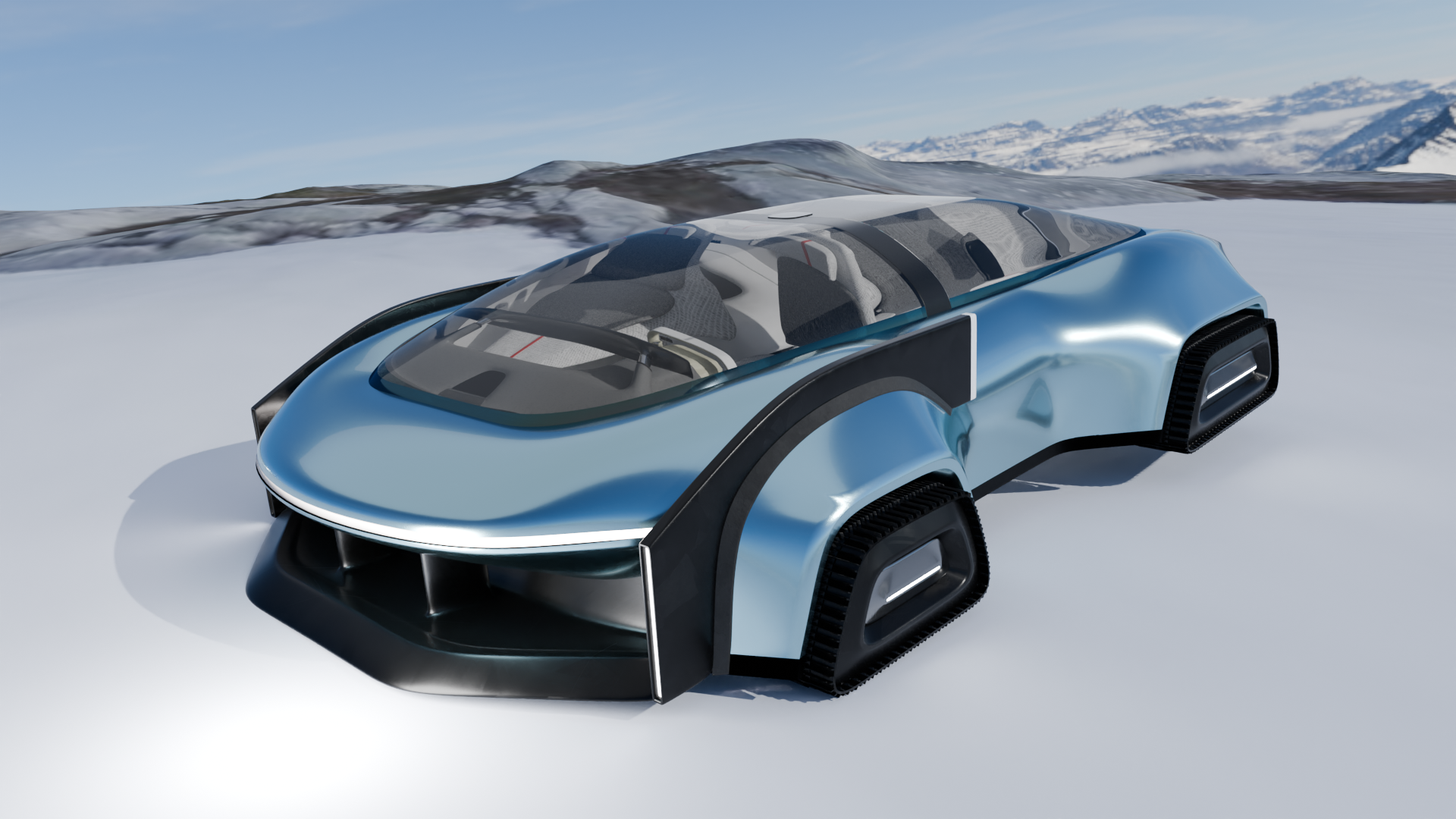
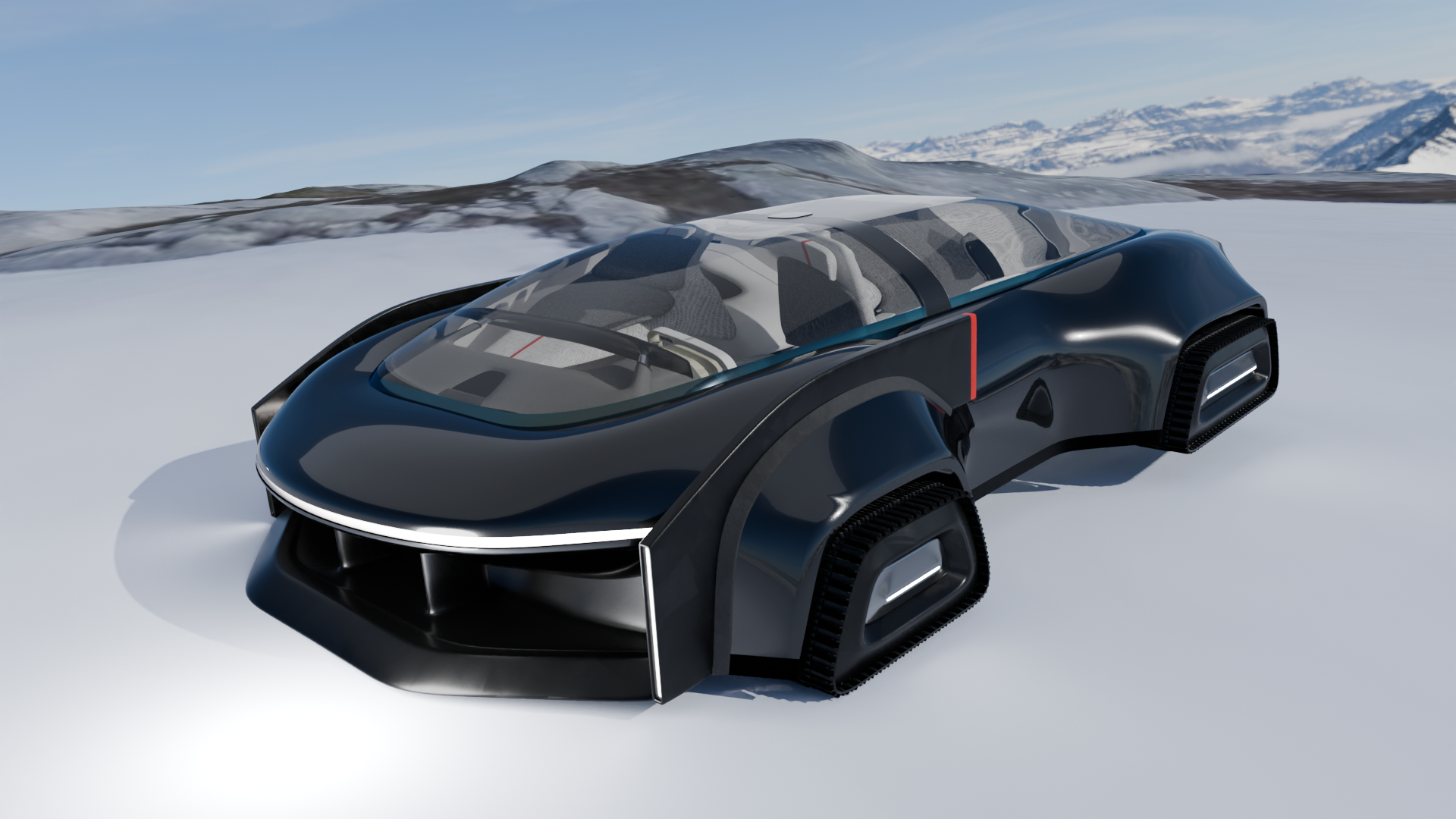
The shell is a single form — the finish is where the personality lives. From the signature alpine red to glacier white and midnight navy, each colorway is tuned for a different visibility profile and a different kind of day on the mountain.
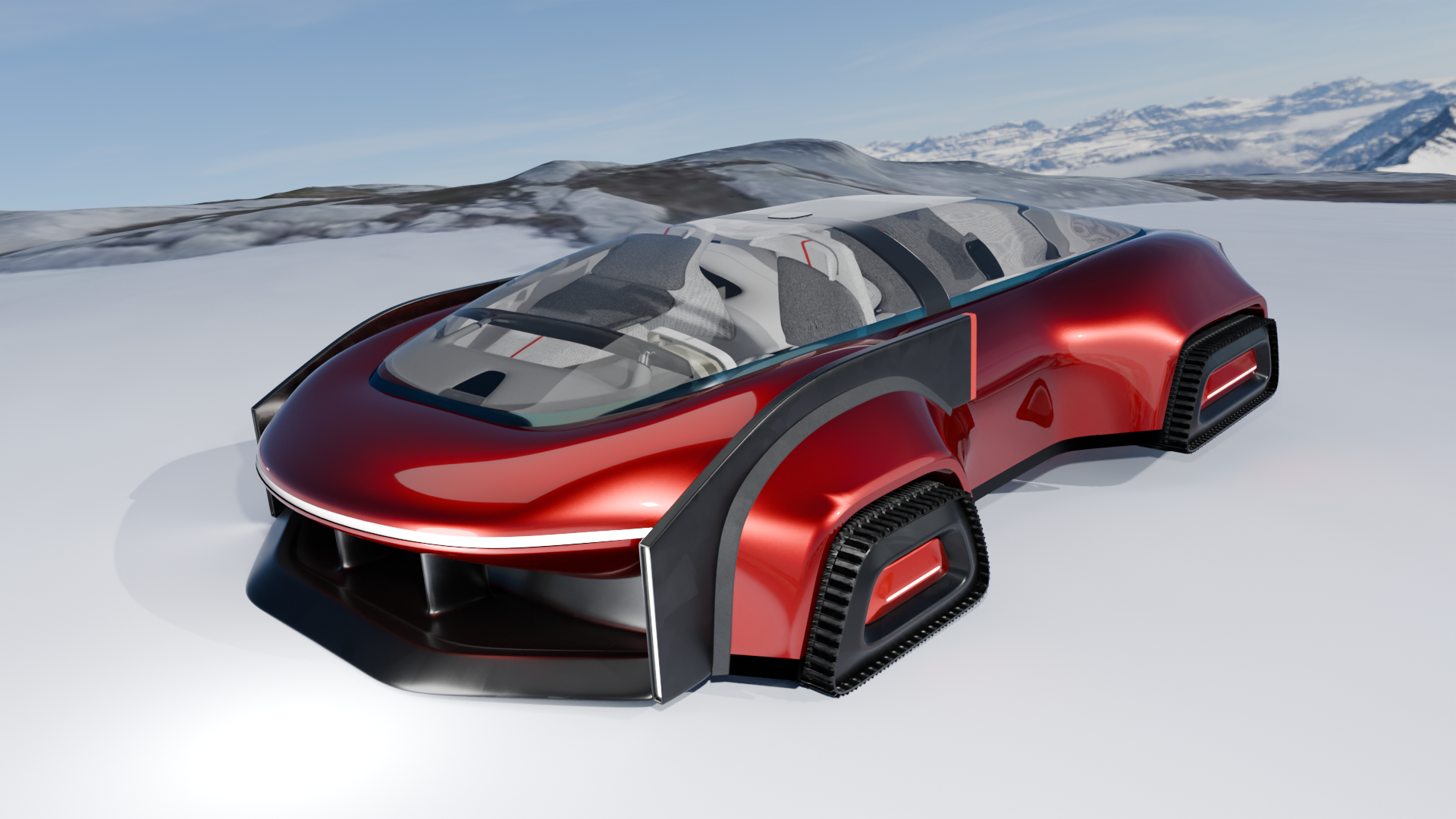
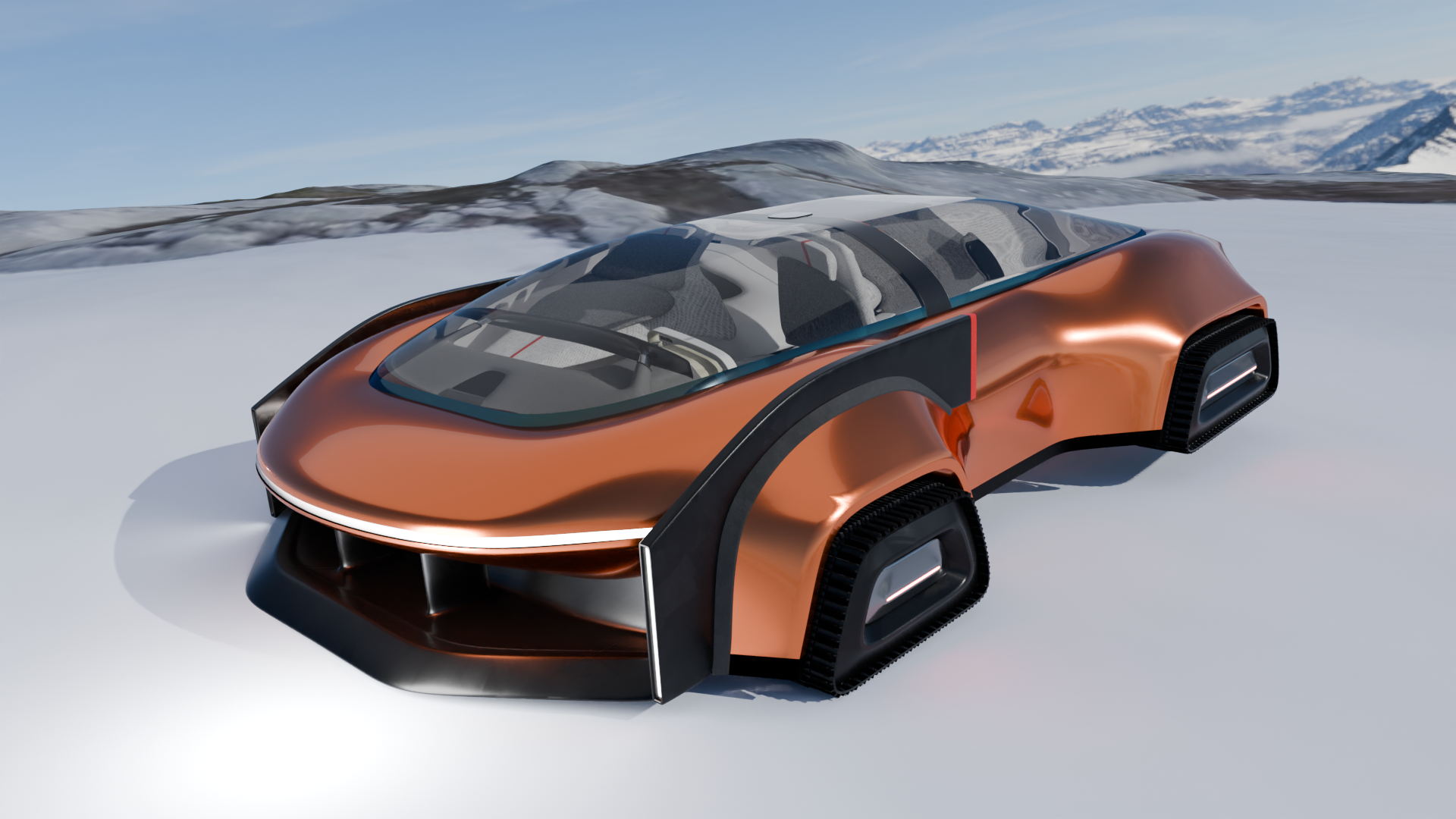
NIVIS in Alpine Red finish NIVIS in Patrol Copper finish NIVIS in High-Vis Lime finish NIVIS in Glacier Blue finish NIVIS in Midnight Navy finish
Alpine Red #E7313A
NIVIS — rear three-quarter view on an alpine ridge
NIVIS · Final

NIVIS.

A modular alpine vehicle that carries the rescue to the rider, and the rider home.

Its sibling

AERIS — the helmet written for the first six minutes