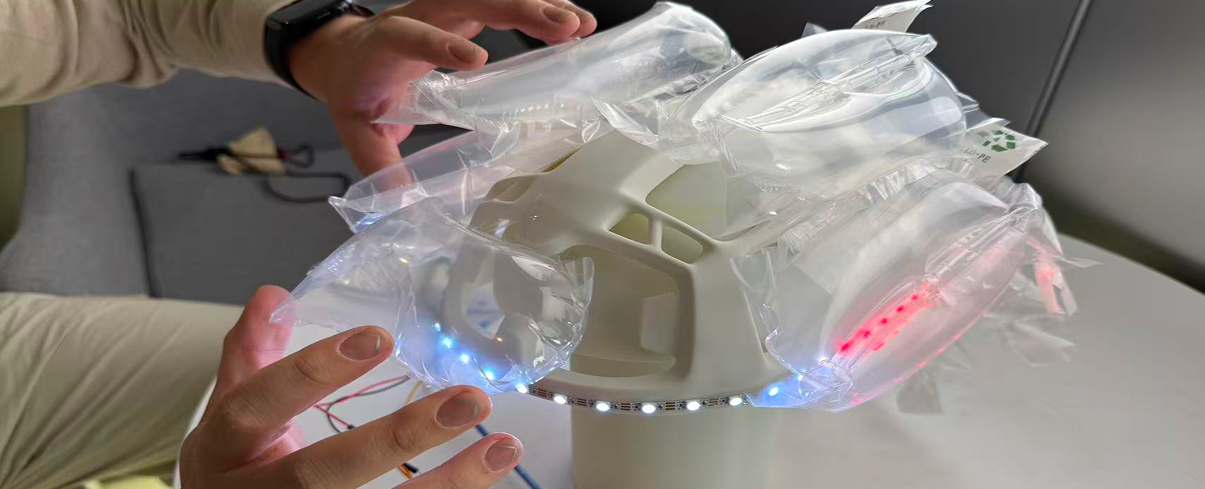
Front light
White LEDs — forward visibility
A bright white arc across the brow throws light onto the trail and signals the rider's heading to anyone approaching from the front.
A helmet that keeps breathing after the fall.
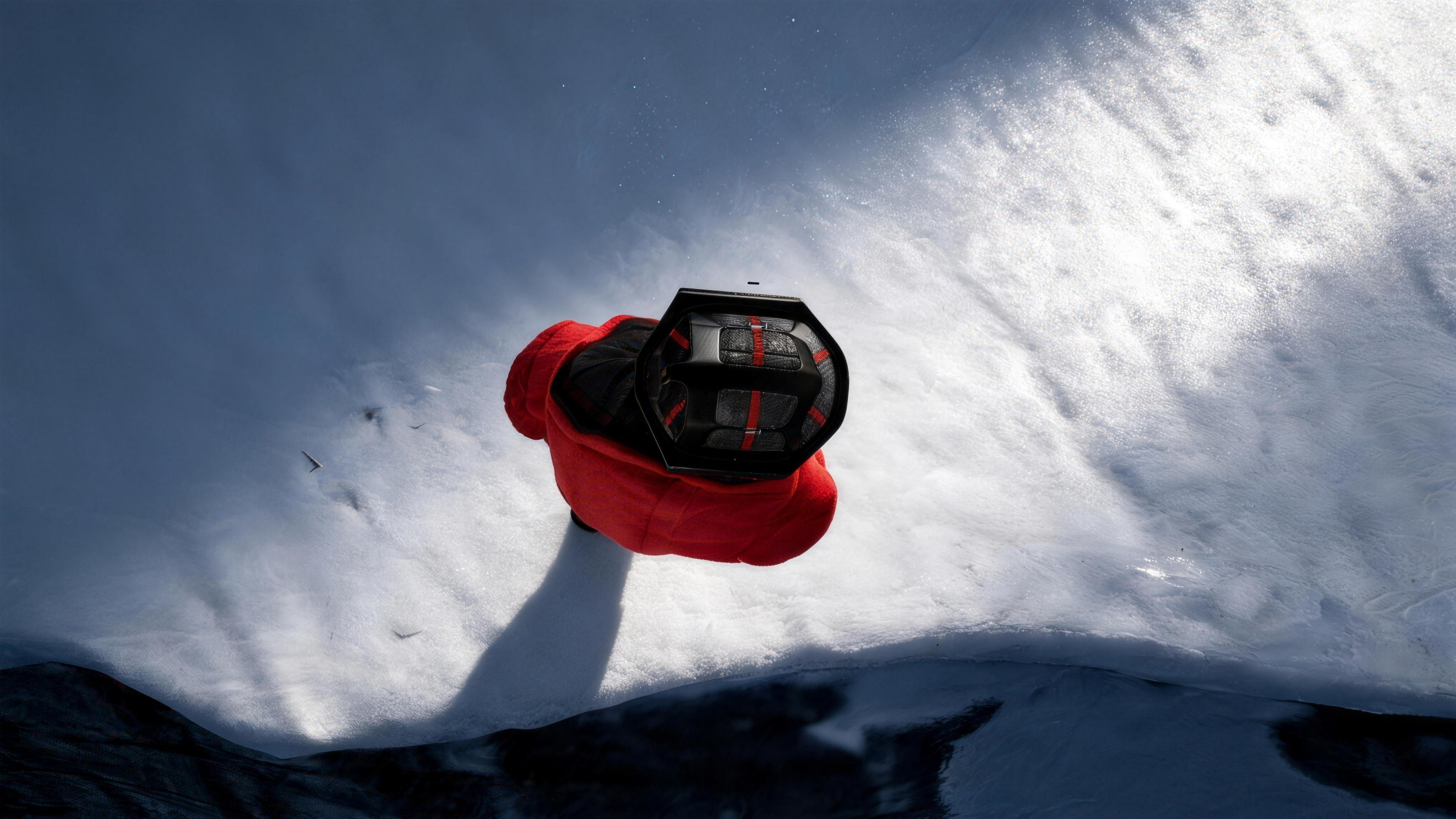
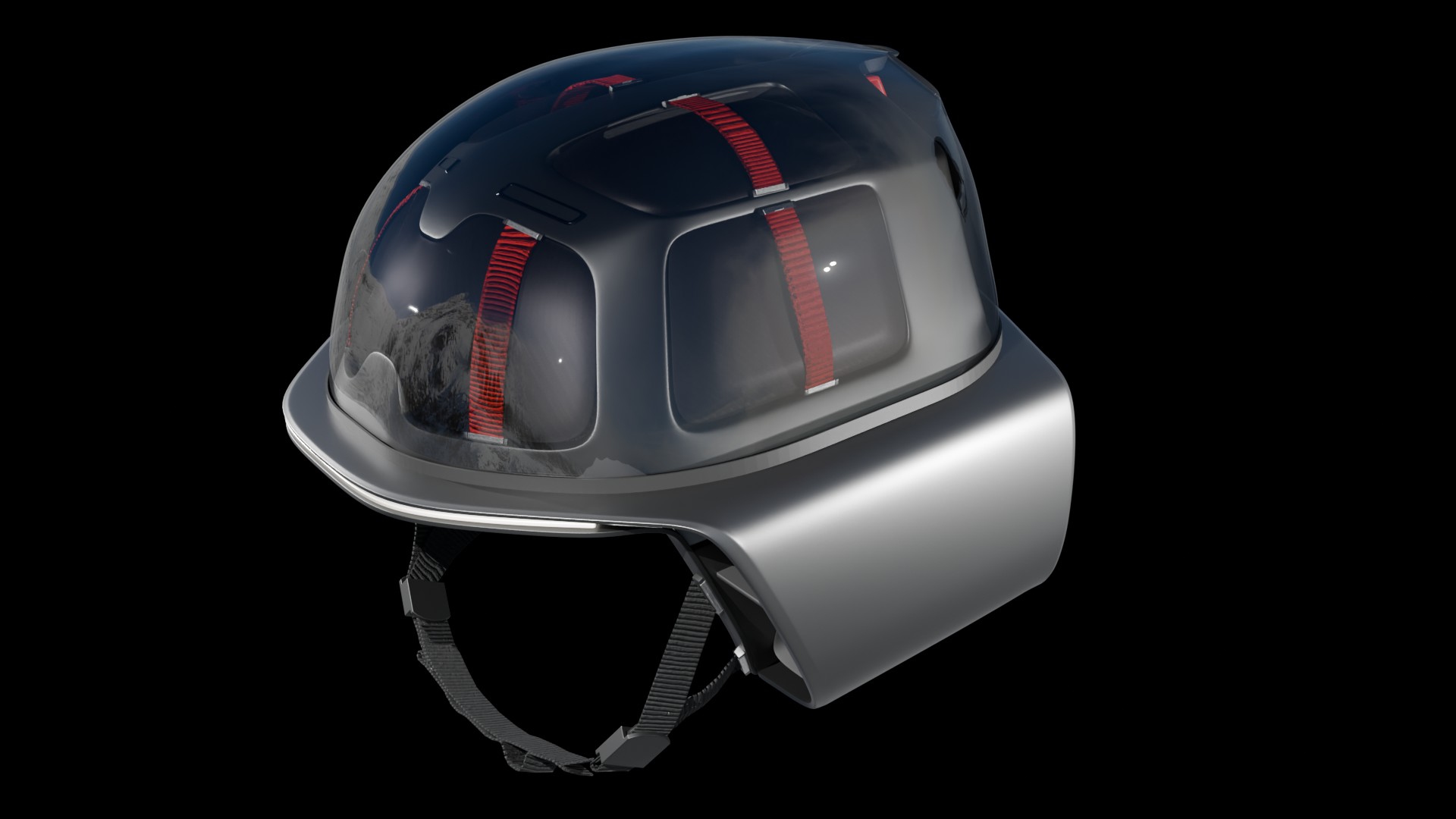
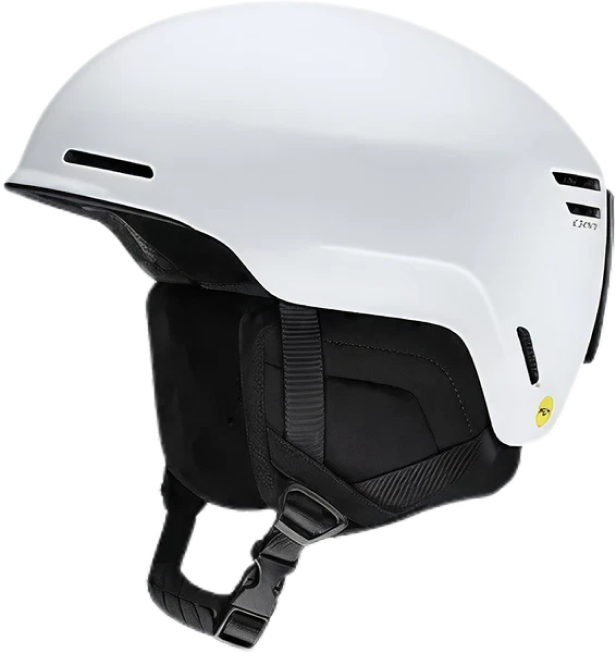
AERIS is a snow-sports helmet with an integrated airbag array and a 1.5 L oxygen reserve — designed to keep alpine riders alive through the first critical minutes after a buried fall, long enough for patrol to reach them.
Product renders on-site — the helmet as it's meant to be worn, before the rest of the case study walks you through how it got there.
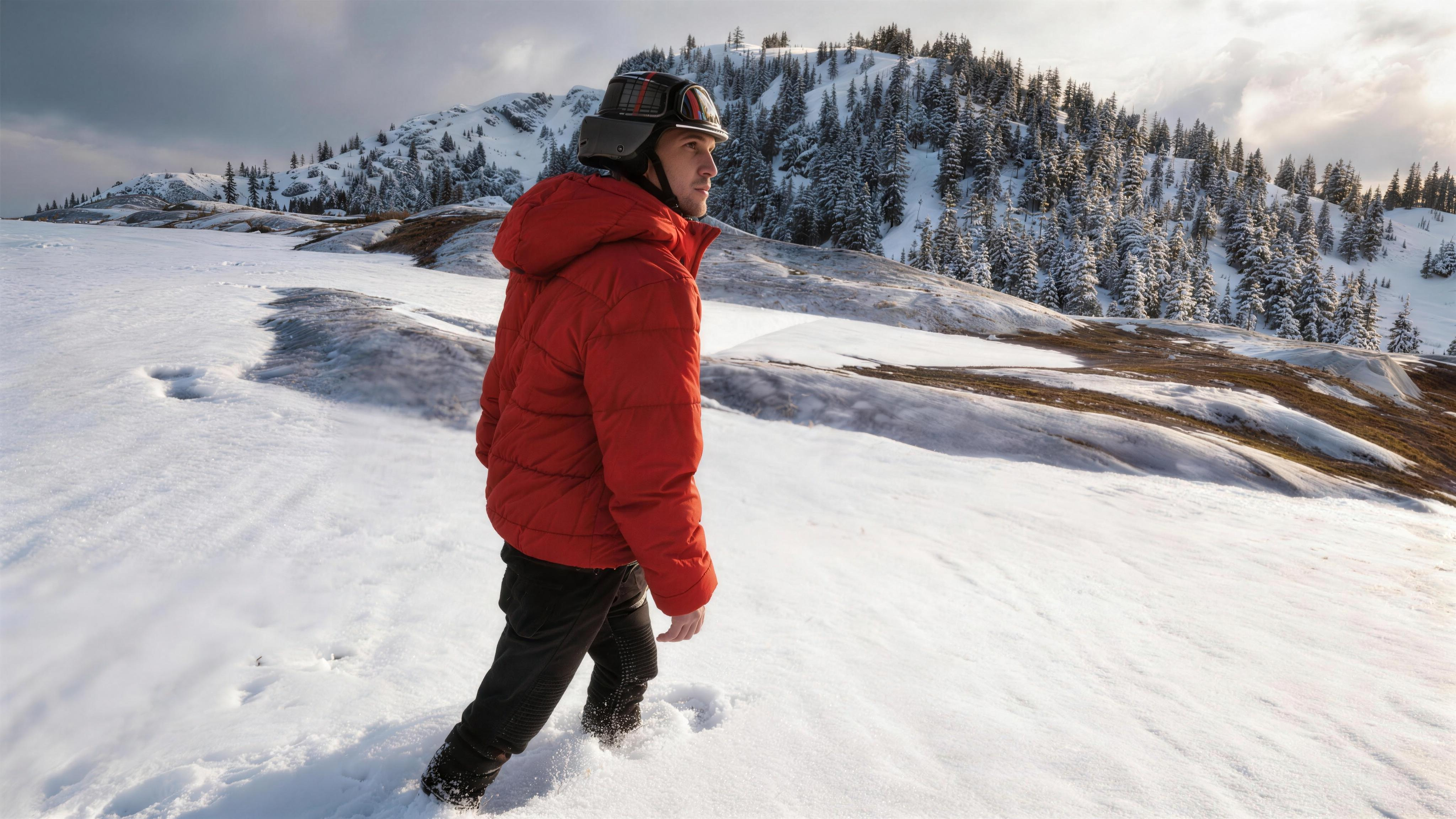 Close detail 01
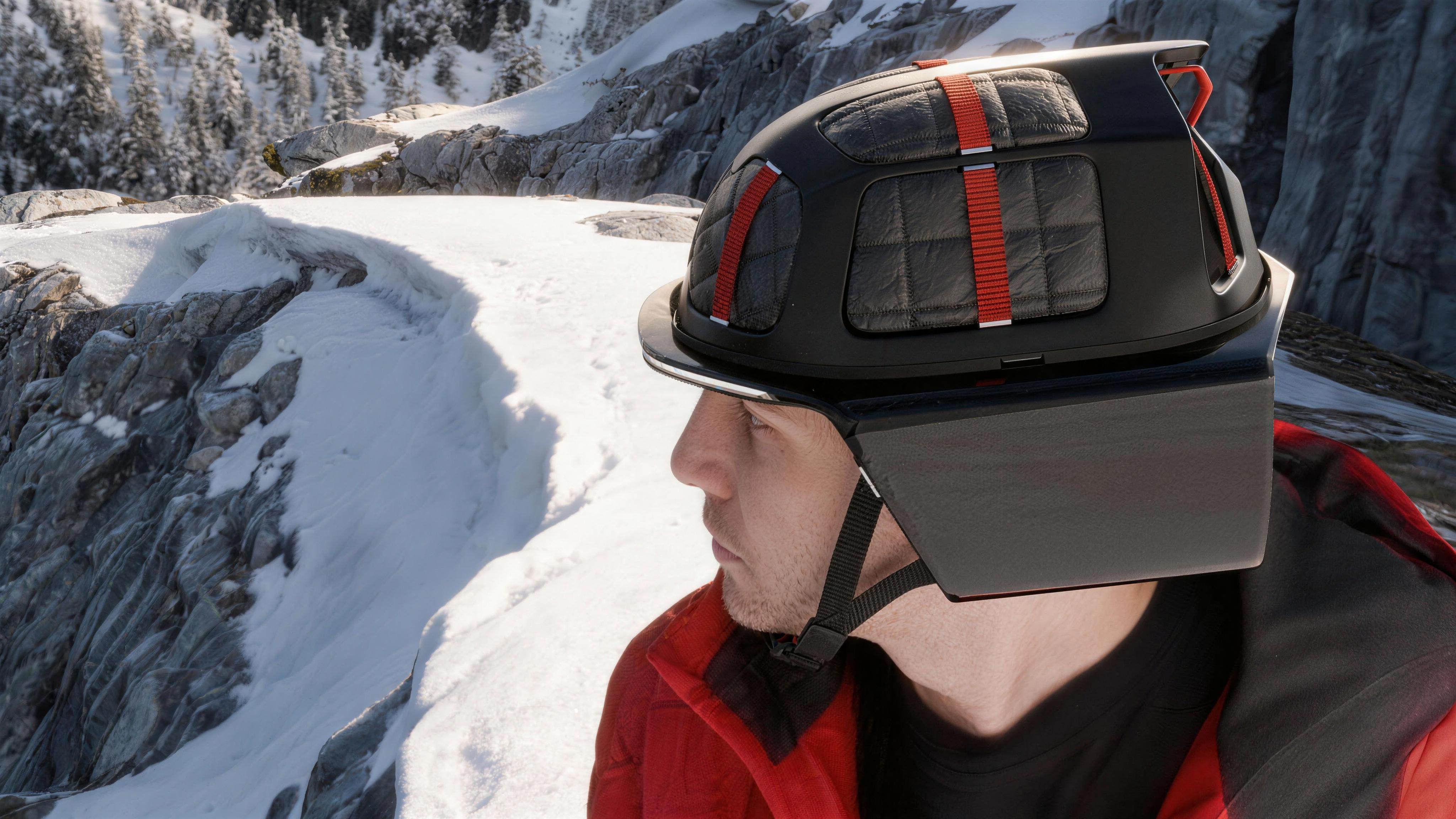 Close detail 02
Three lifelines engineered into a single shell — impact absorption, a breathing-air reserve, and an always-on illumination system. Scroll through the walkthrough to see each of them.
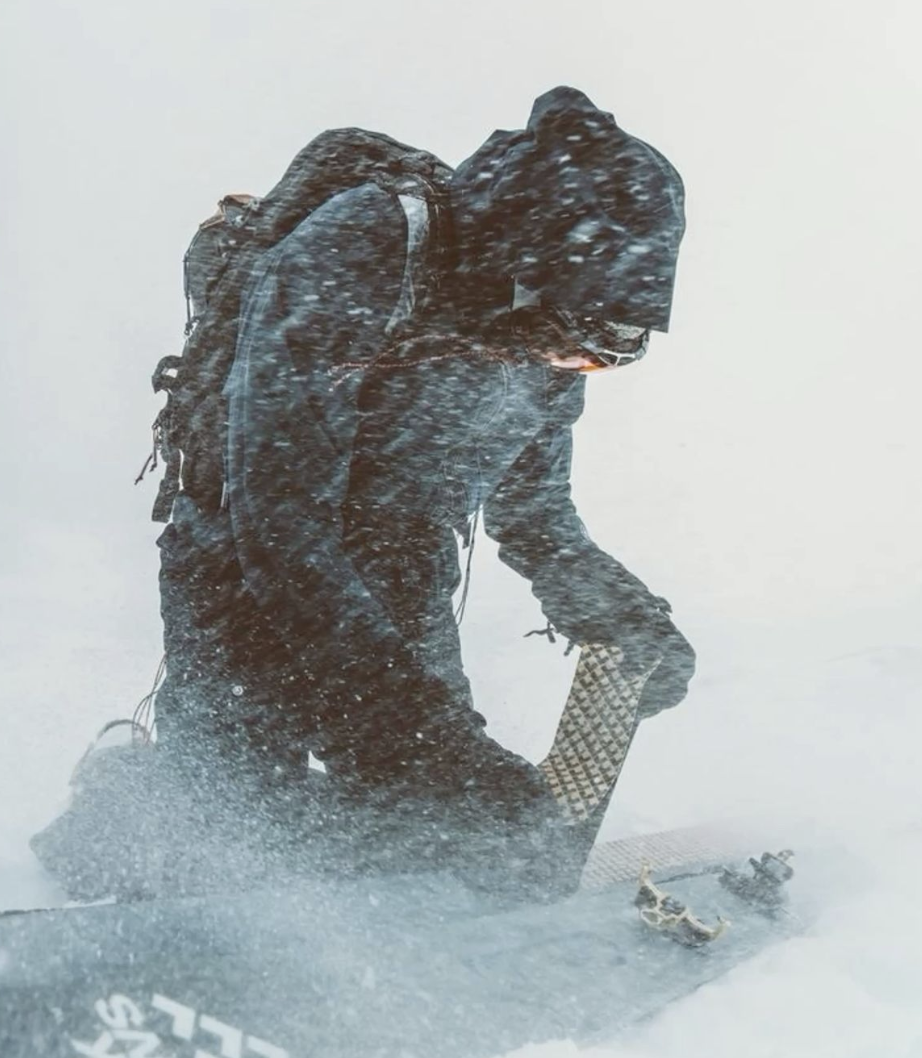
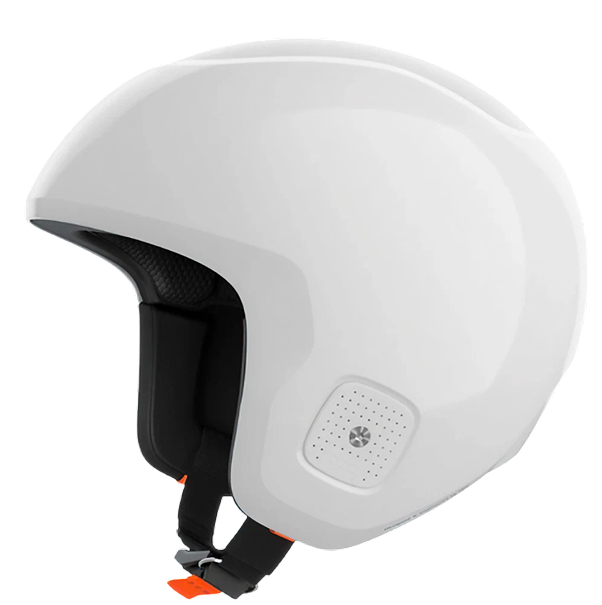
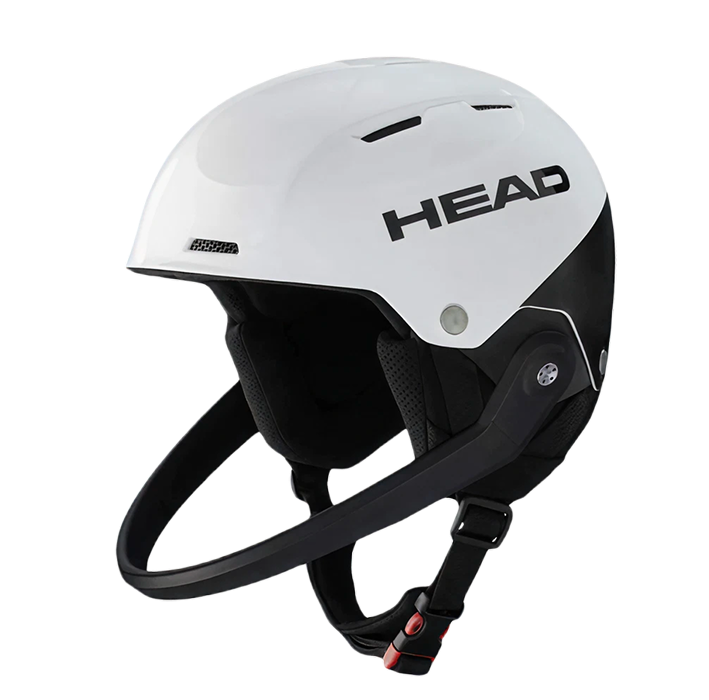
Every serious snow brand has a flagship impact helmet. Every serious brand charges $250–$500 for it. None of them do anything after the first impact.
The visual language borrows from automotive safety — carbon-black shell, high-gloss dome, single alpine-red accent where the system wakes up. Calm on the slope; obvious on the snow.
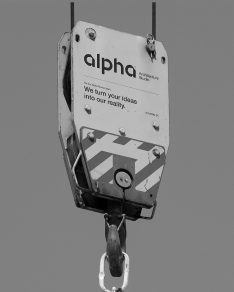
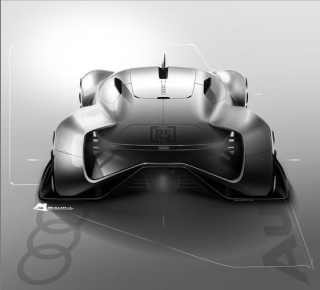
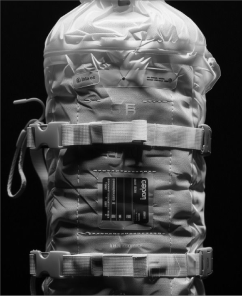
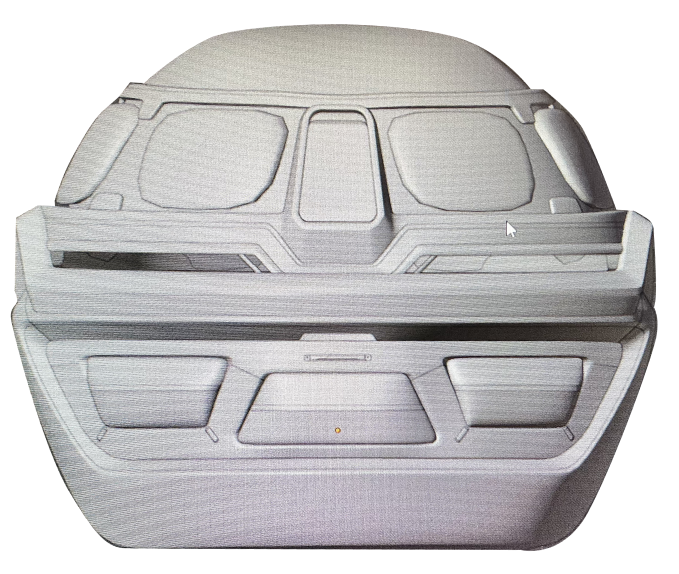
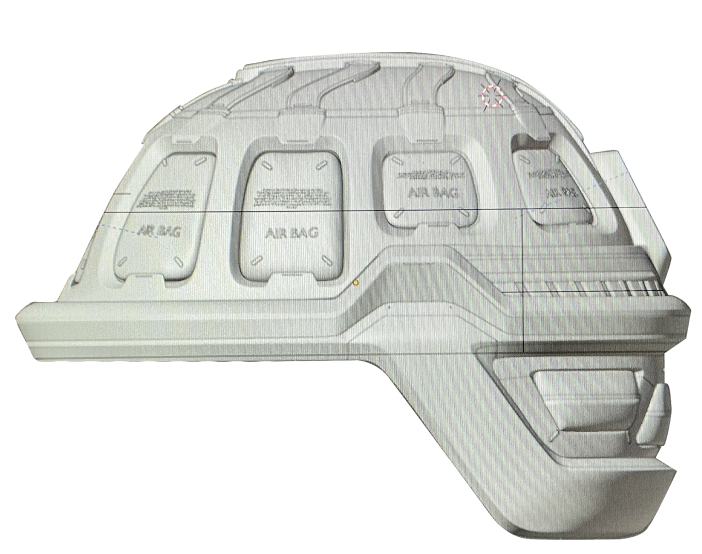
Before any CAD, the two bets — airbag array and oxygen reserve — had to fit on a helmet shape a rider would actually wear. This sheet was the first place the silhouette, the venting, and the chin-bar oxygen module sat together on paper.

Five candidates ran through impact, weight, cost, and moldability. The PC-hybrid sat in the middle of every axis — production-ready, strong enough, and moldable enough to host the airbag layout.
Every revision came from a crit session, ski-patrol feedback, or a bench test. The final shape was the fifth answer to the same question.
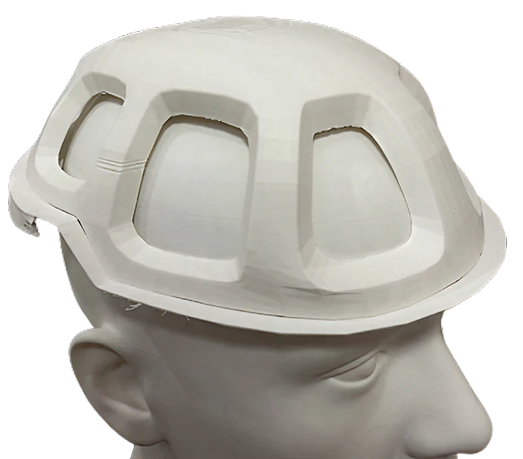
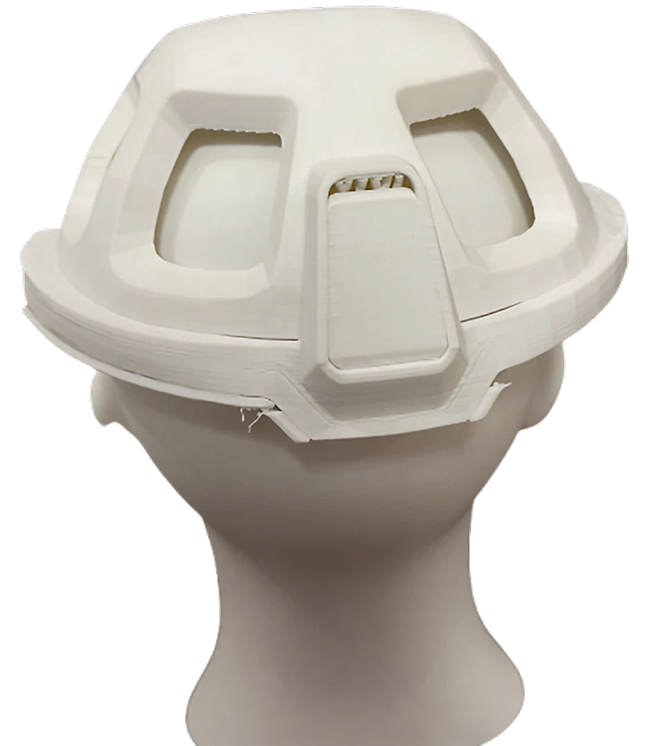
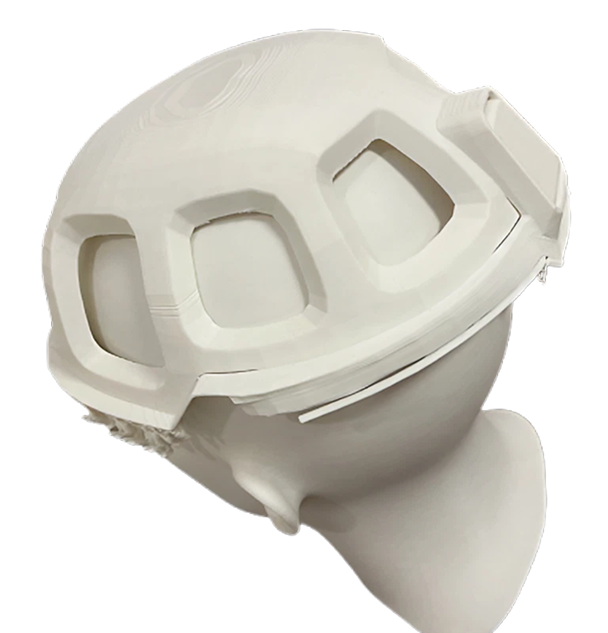
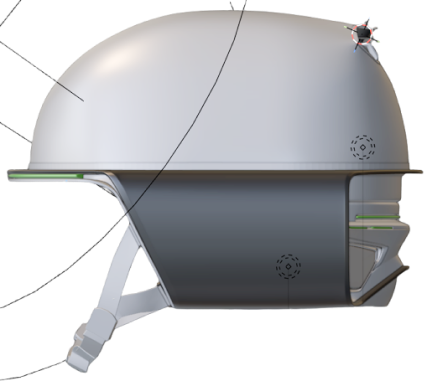
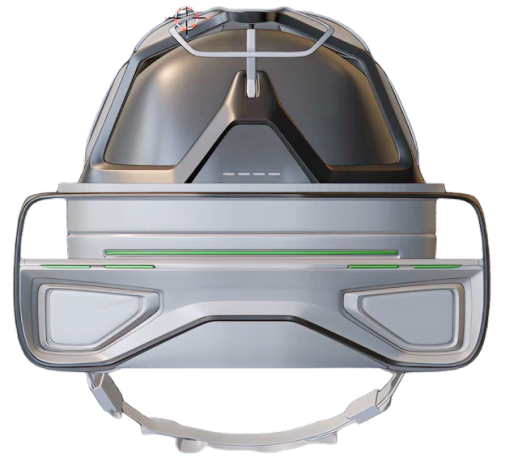
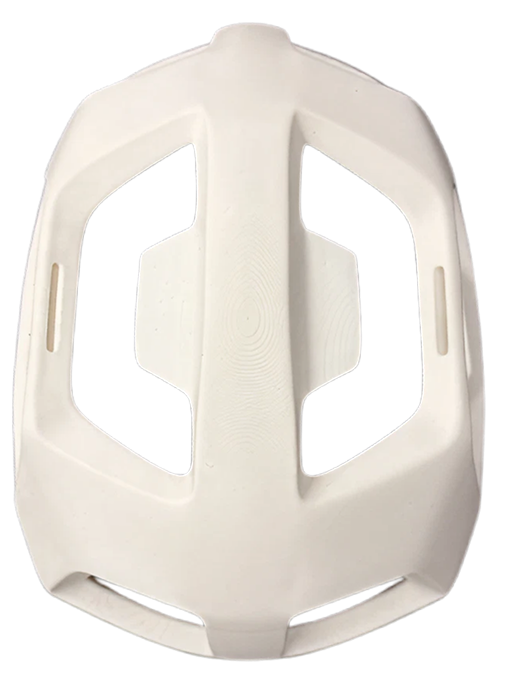
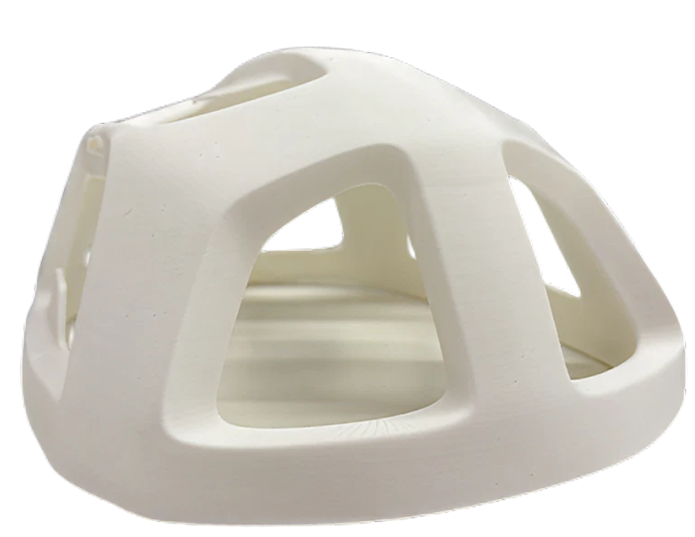
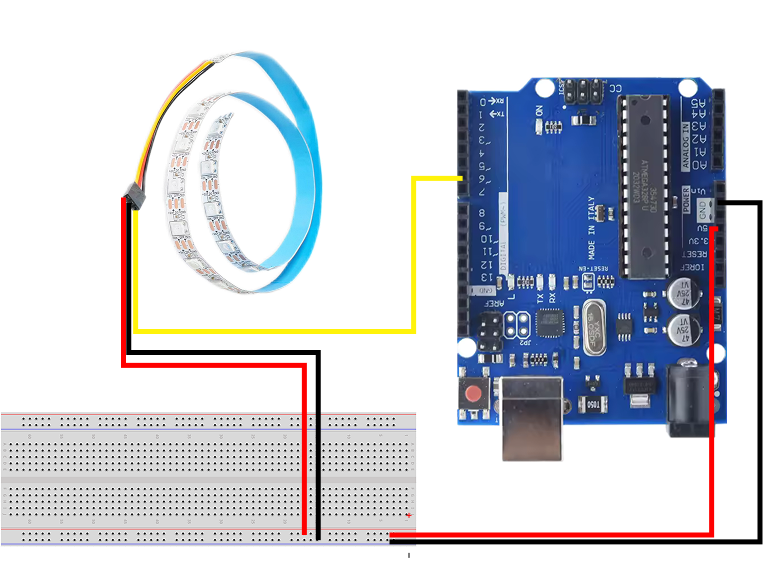
White LEDs up front light the line of travel; red LEDs along the back make the rider legible from behind — a single continuous ring driven by an Arduino controller.
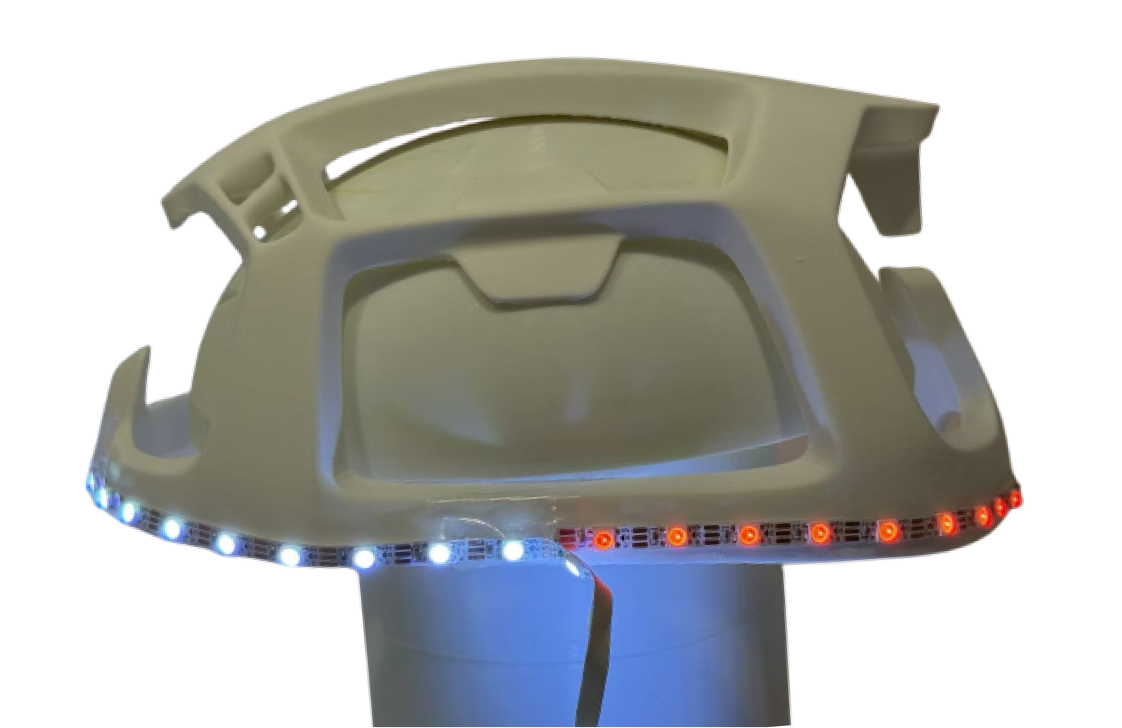
A bright white arc across the brow throws light onto the trail and signals the rider's heading to anyone approaching from the front.
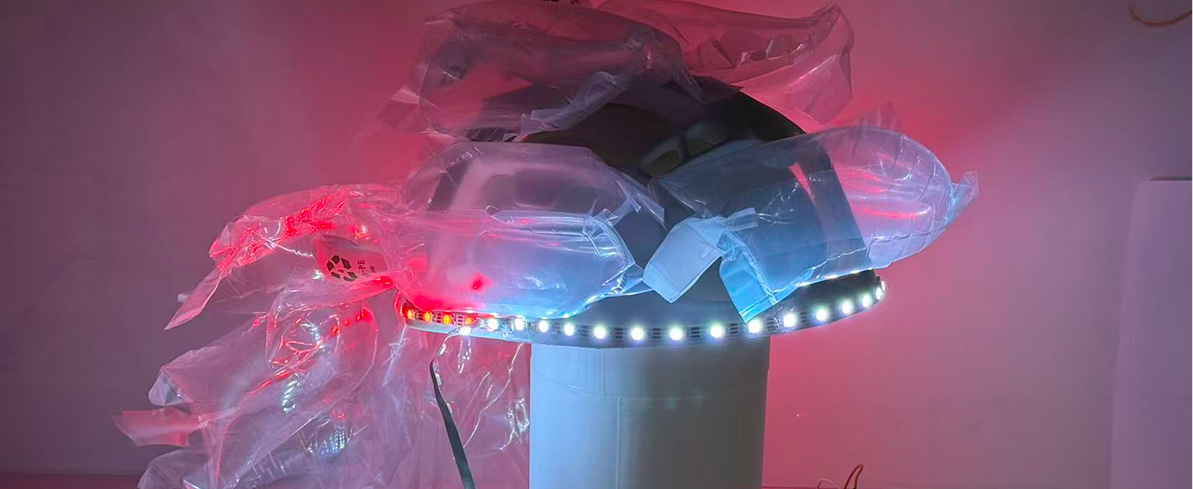
Red pixels along the rear of the rim keep the rider visible to anyone following — the same ring doubles as a distress beacon on impact.
// AERIS · full-rim LED + impact distress
#include <Wire.h>
#include <MPU6050.h>
#include <FastLED.h>

const uint8_t LED_PIN   = 6;
const uint8_t NUM_LEDS  = 24;
const float   G_THRESH  = 8.5;  // g

MPU6050 imu;
CRGB    ring[NUM_LEDS];

void setup() {
  FastLED.addLeds<WS2812B, LED_PIN, GRB>(ring, NUM_LEDS);
  imu.initialize();
  setRidingMode();        // white front · red rear
}

void loop() {
  float g = imu.getAccelMagnitudeG();
  if (g > G_THRESH) {
    fireAirbagArray();    // 17 cells · parallel
    distressRing(CRGB::Red);
  }
}
An exploded breakdown of every layer keeping the skier alive.
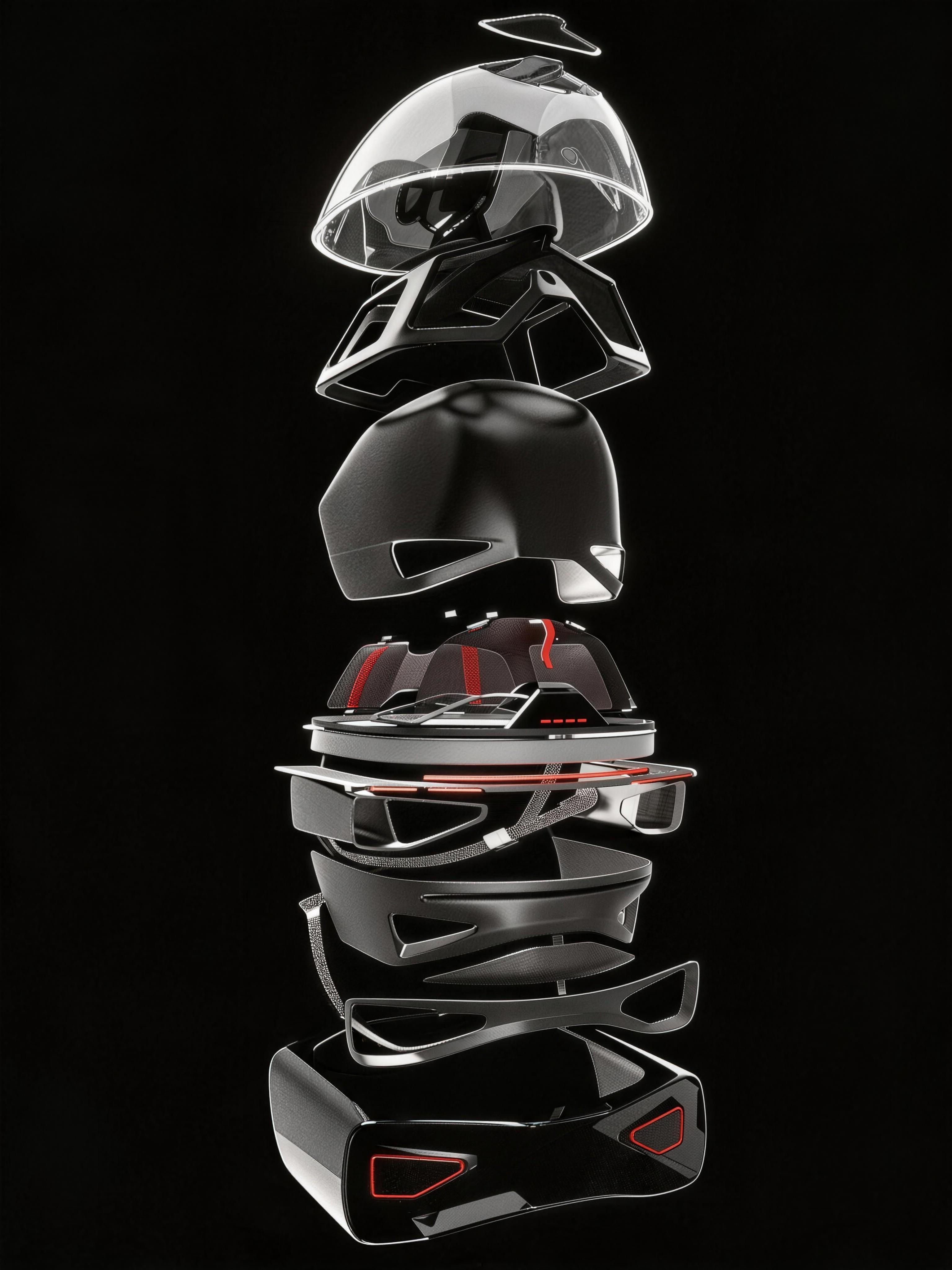
An integrated 8-airbag array offers supplementary protection in high-impact moments.
A high-gloss composite shell resisting abrasion and point impacts on the slope.
Integrated control module — battery, chips, and the central controller for the airbag system.
Shaped memory-foam liner cushions the head and keeps the shell aligned while worn.
Load-bearing inner frame transferring impact energy outward from the skull.
A pressurised gasket isolating the internal systems from snow and moisture.
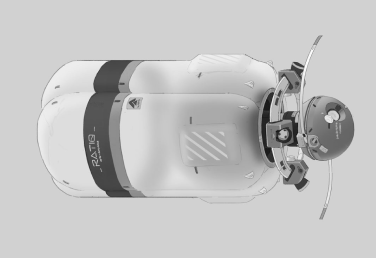
A 1.5 L oxygen reserve — 6 additional minutes of breathing, raising survival probability by 44%.
Scroll down to play the story one frame at a time.
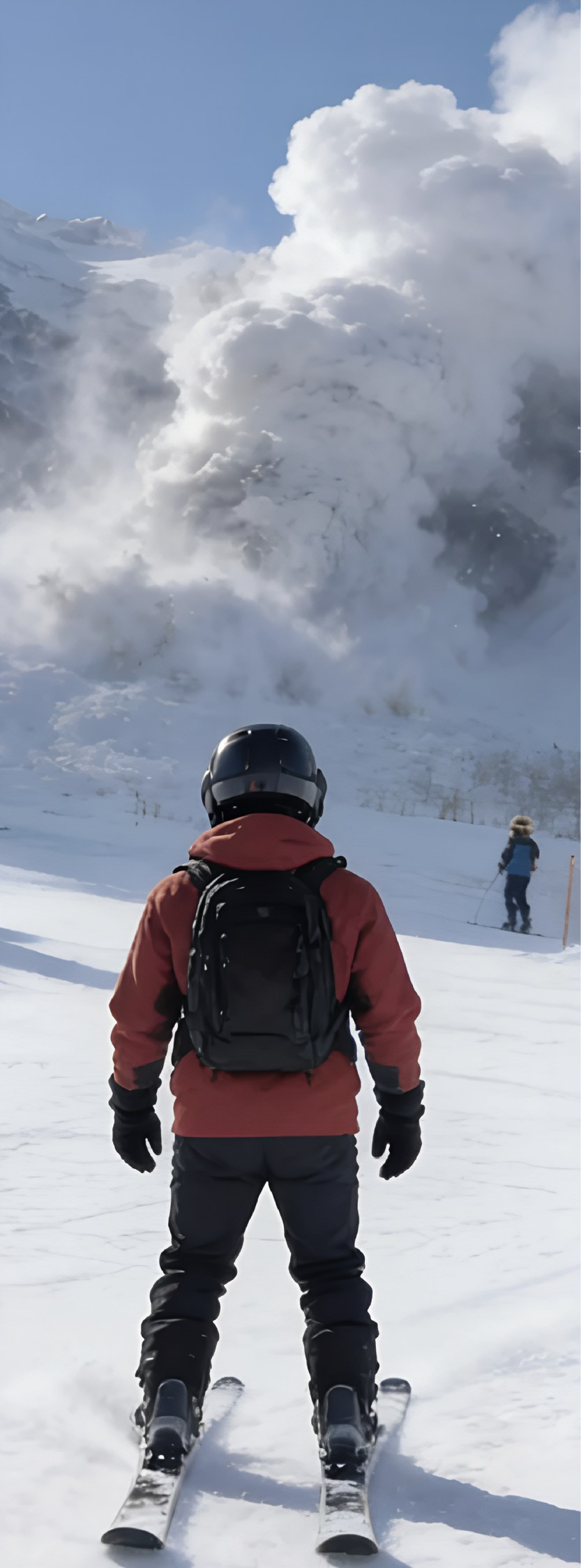
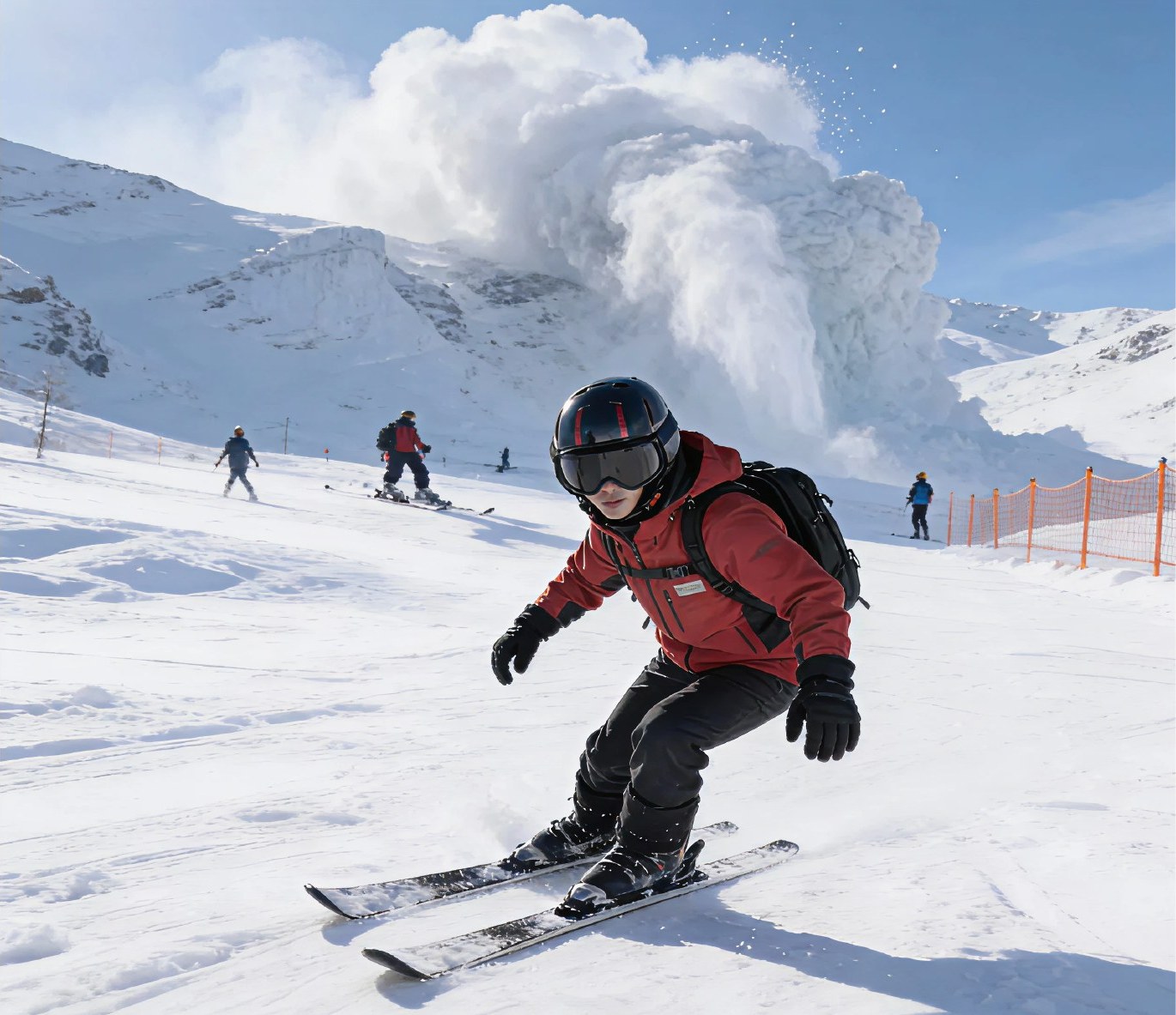
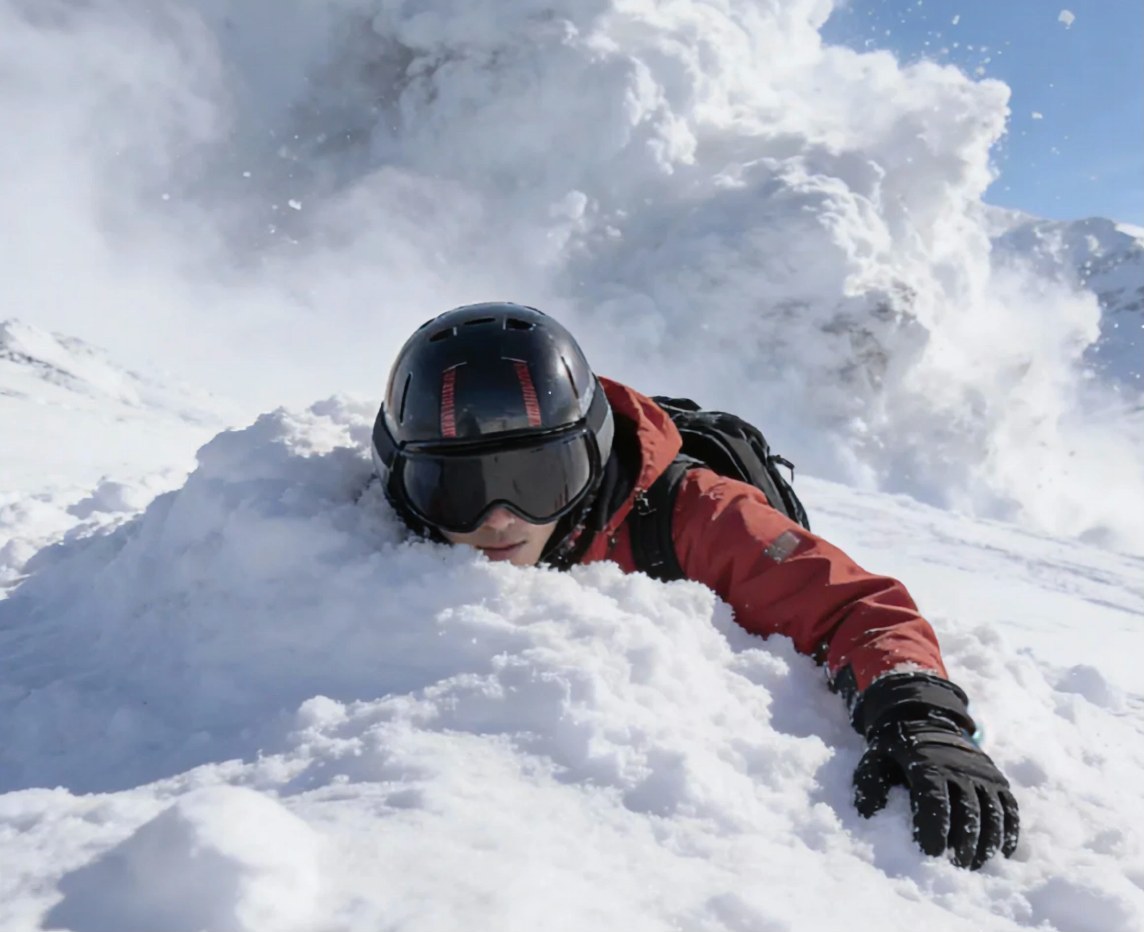
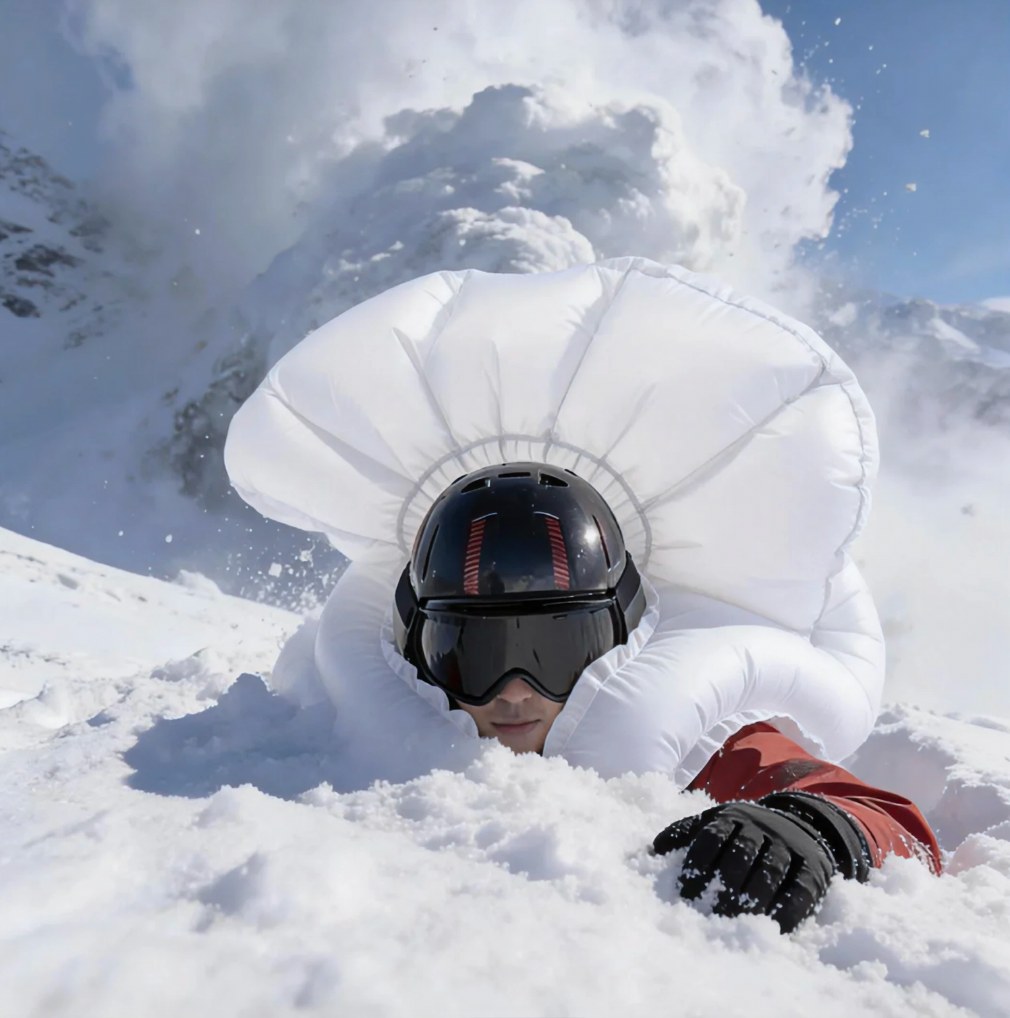
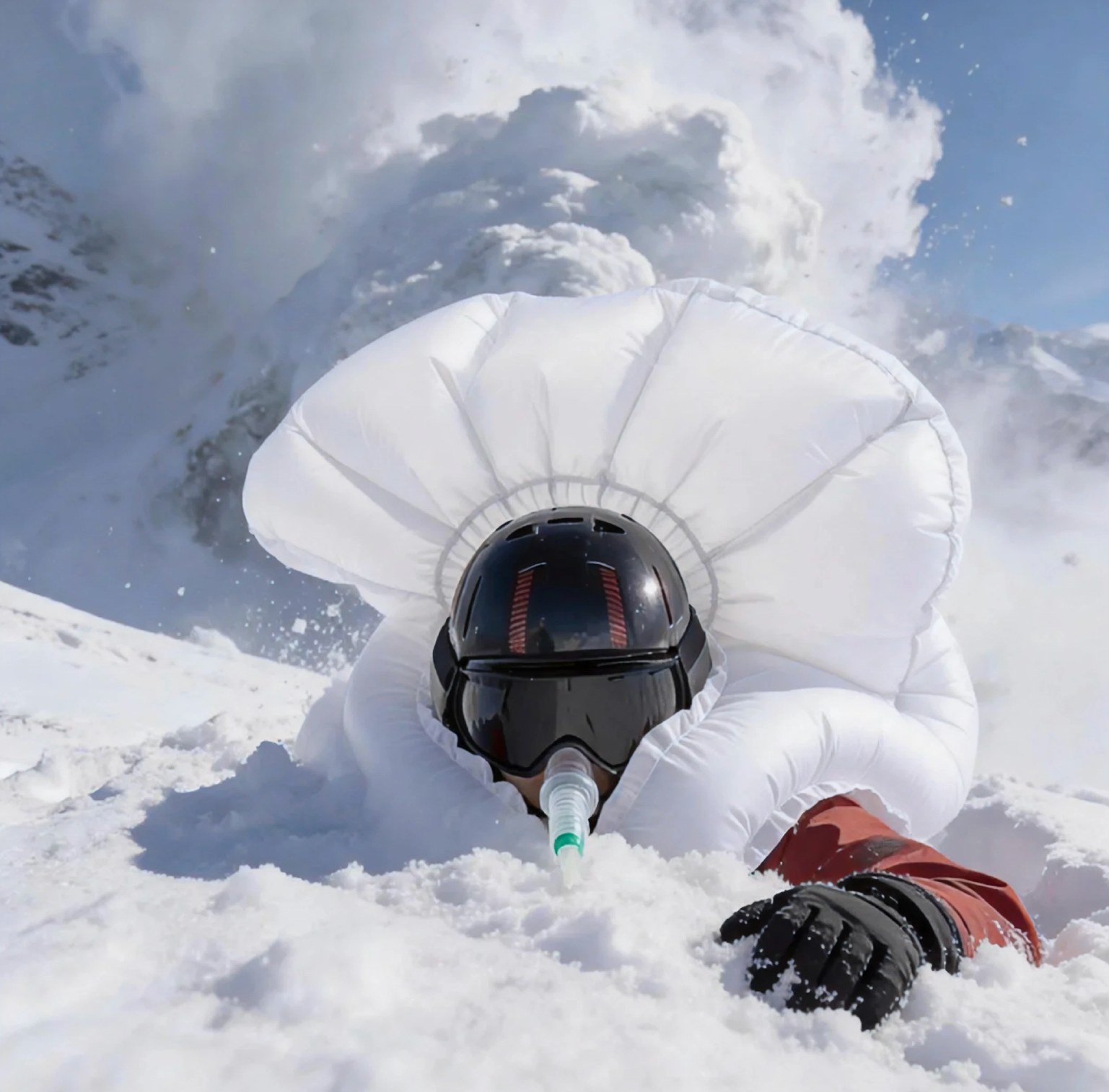
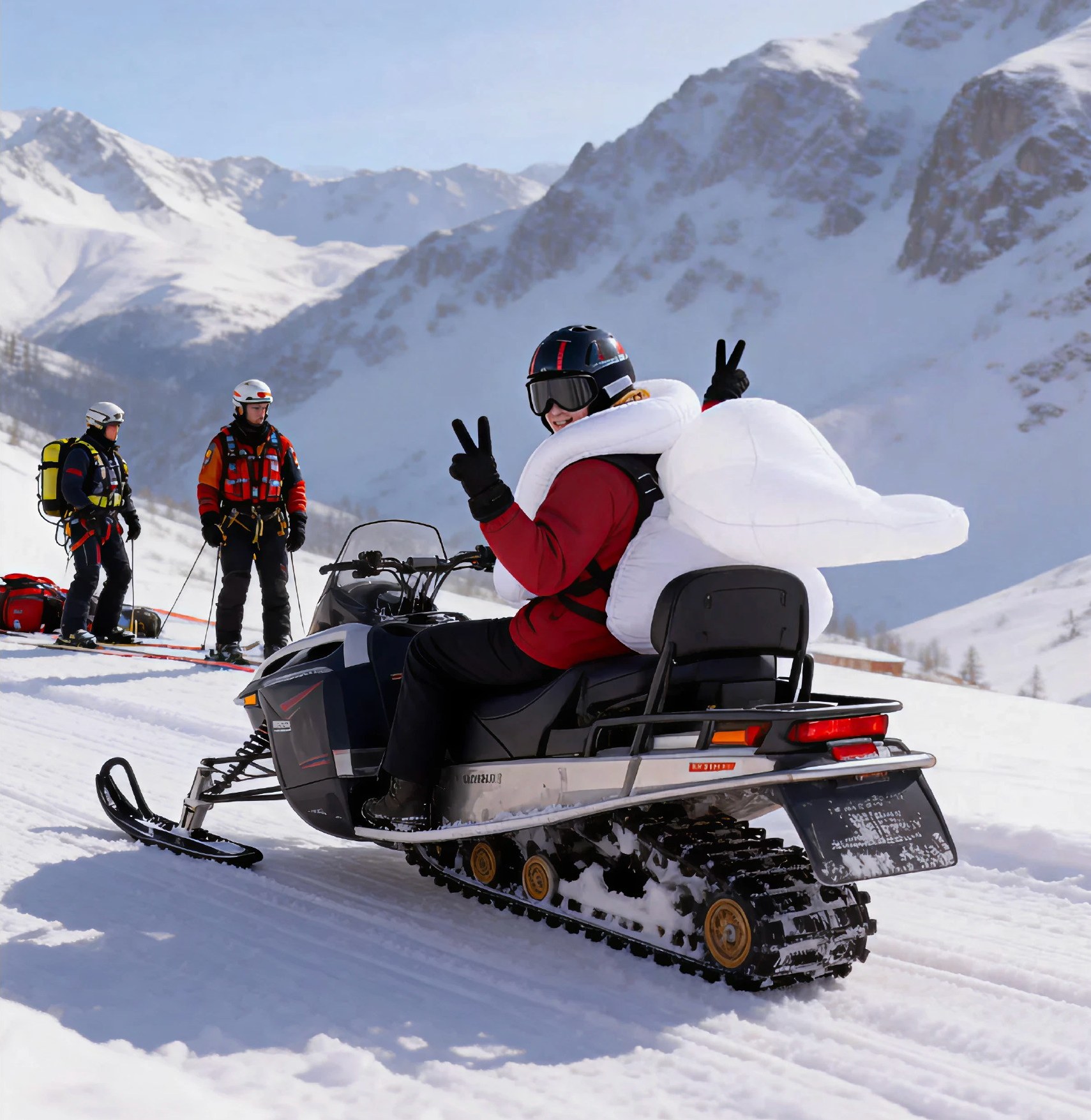
Modelled increase in rescue success rate during the first fifteen minutes of a buried fall — the combined effect of the airbag array and the 1.5 L oxygen reserve.